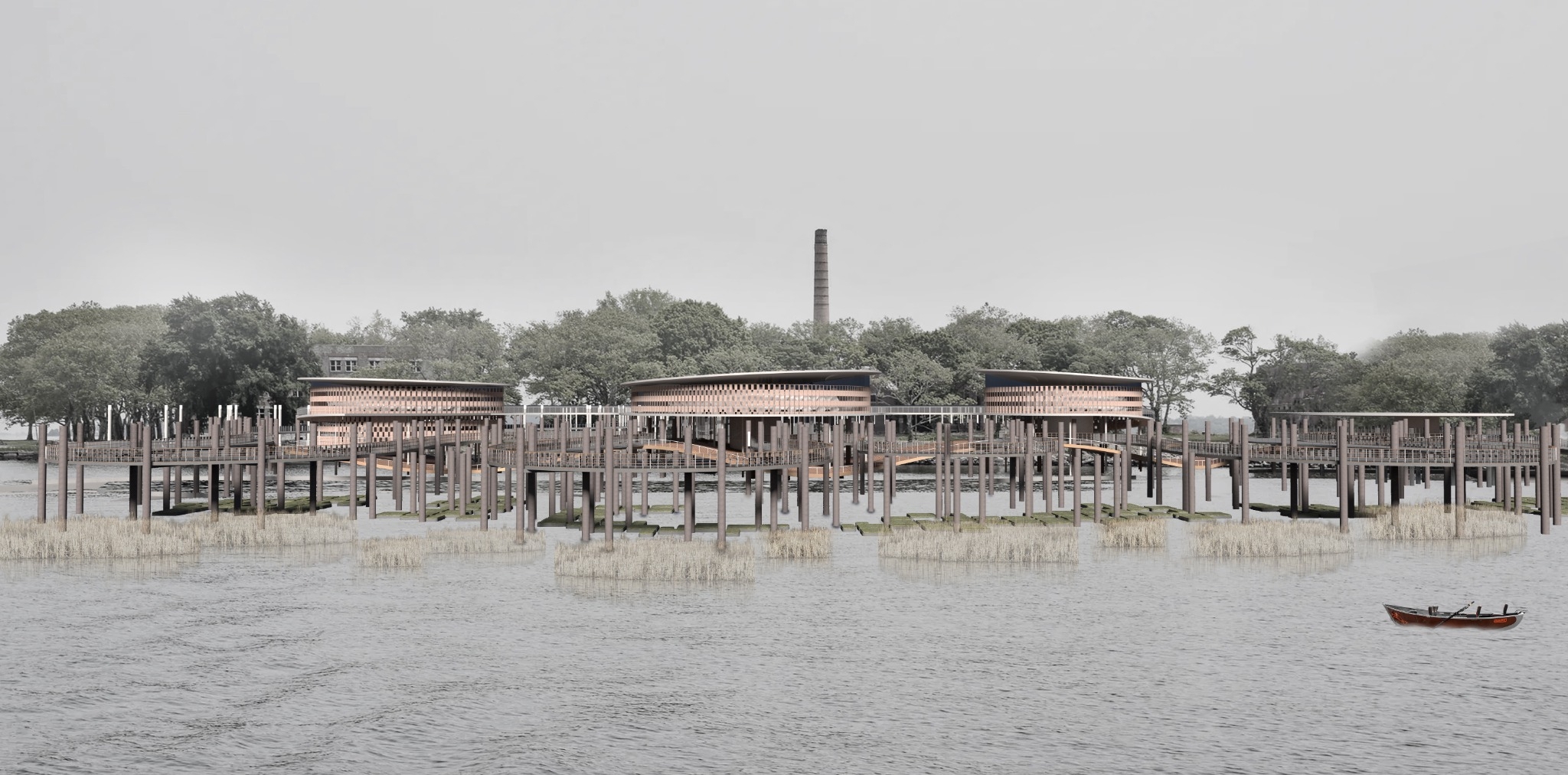
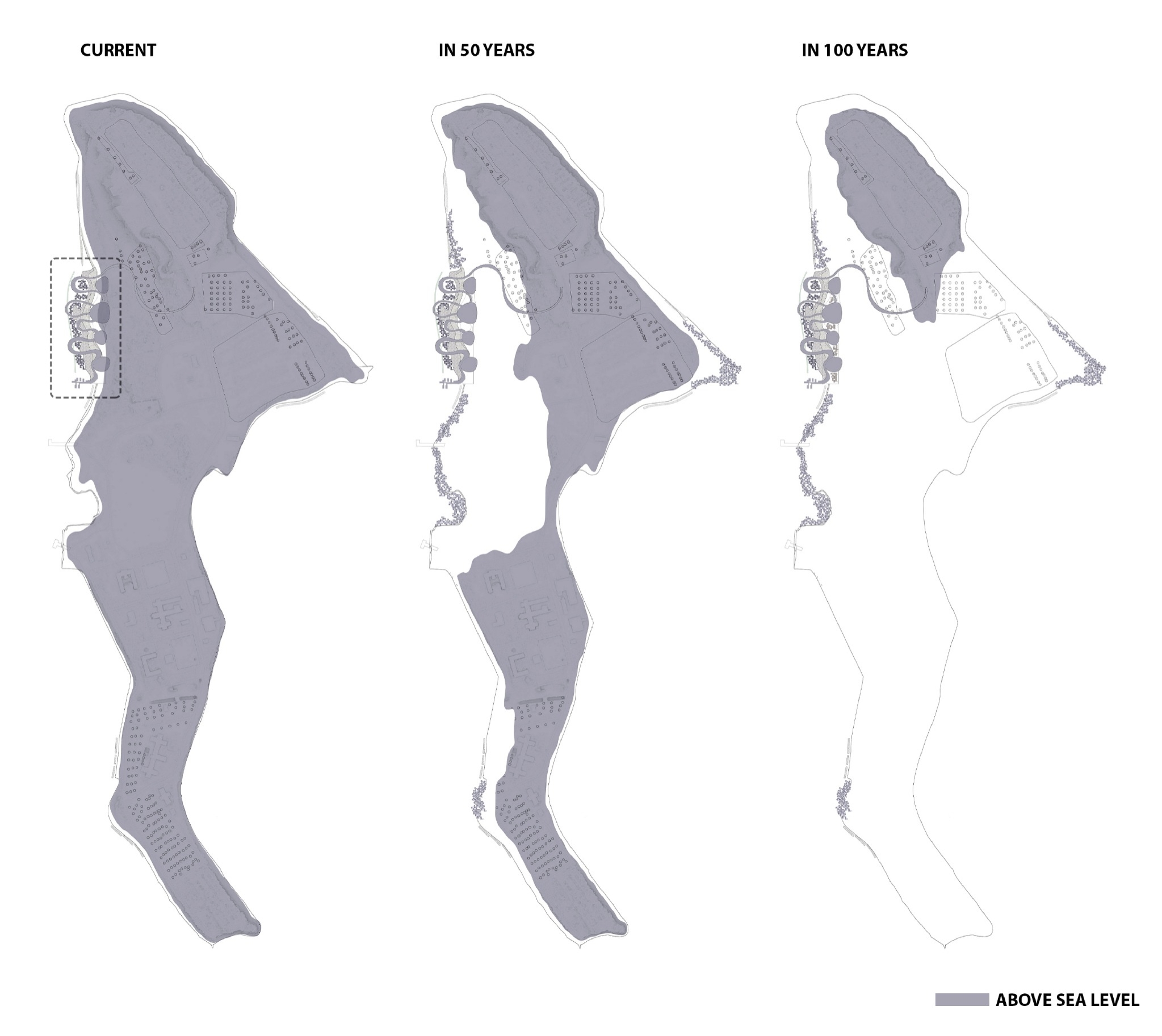
Death can be highlighted and reframed. Human composting commemorates death by returning the organic potential of the dead to the ecological cycle, where death becomes the continuity of another form of life. This project proposes a new infrastructure landscape on Hart Island, New York, acknowledging individual deaths, extending burial ecosystems, and creating a public memorial place. Soil from recomposing supports salt marsh expansion and sea-level rise adaptation.
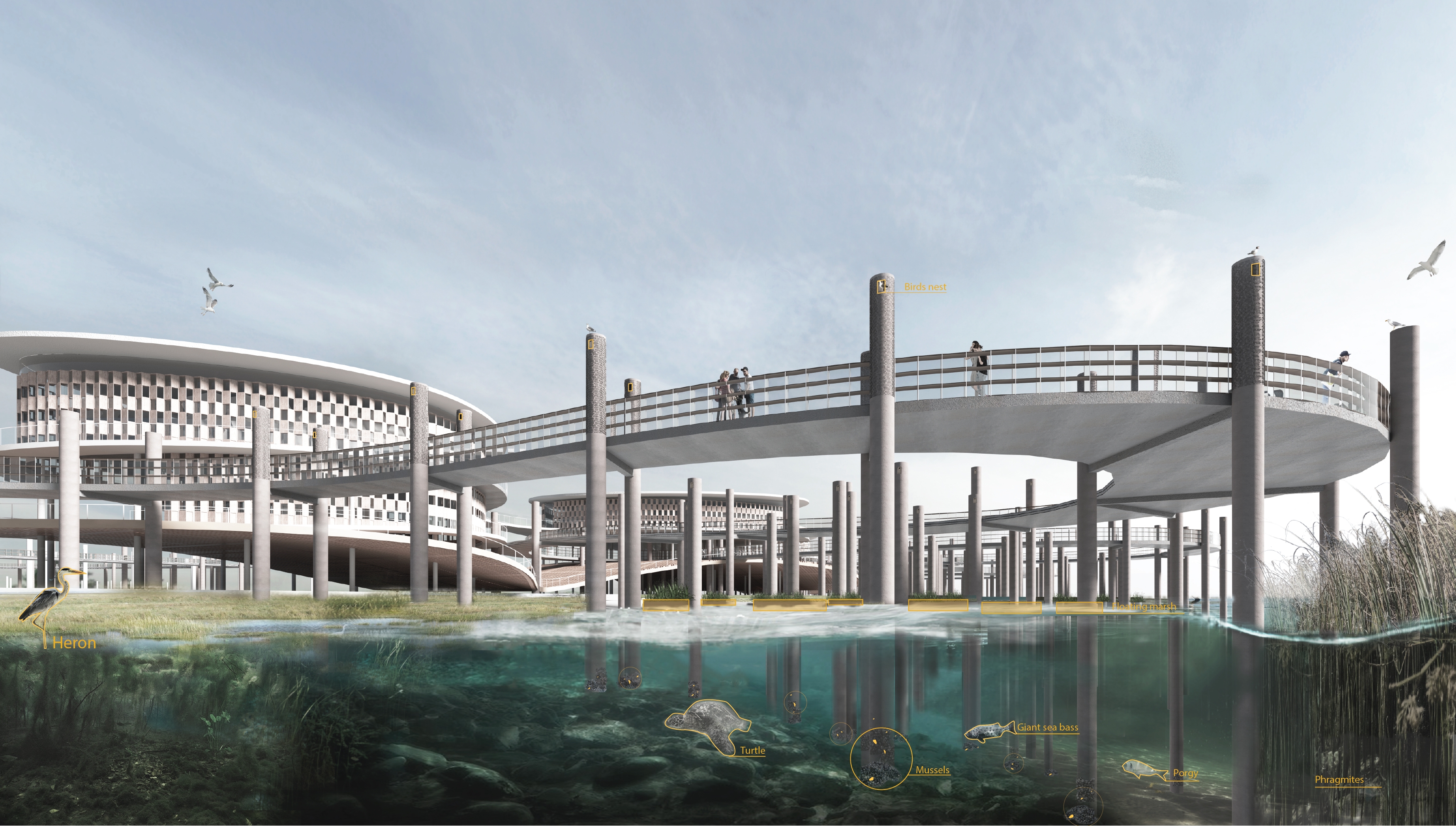
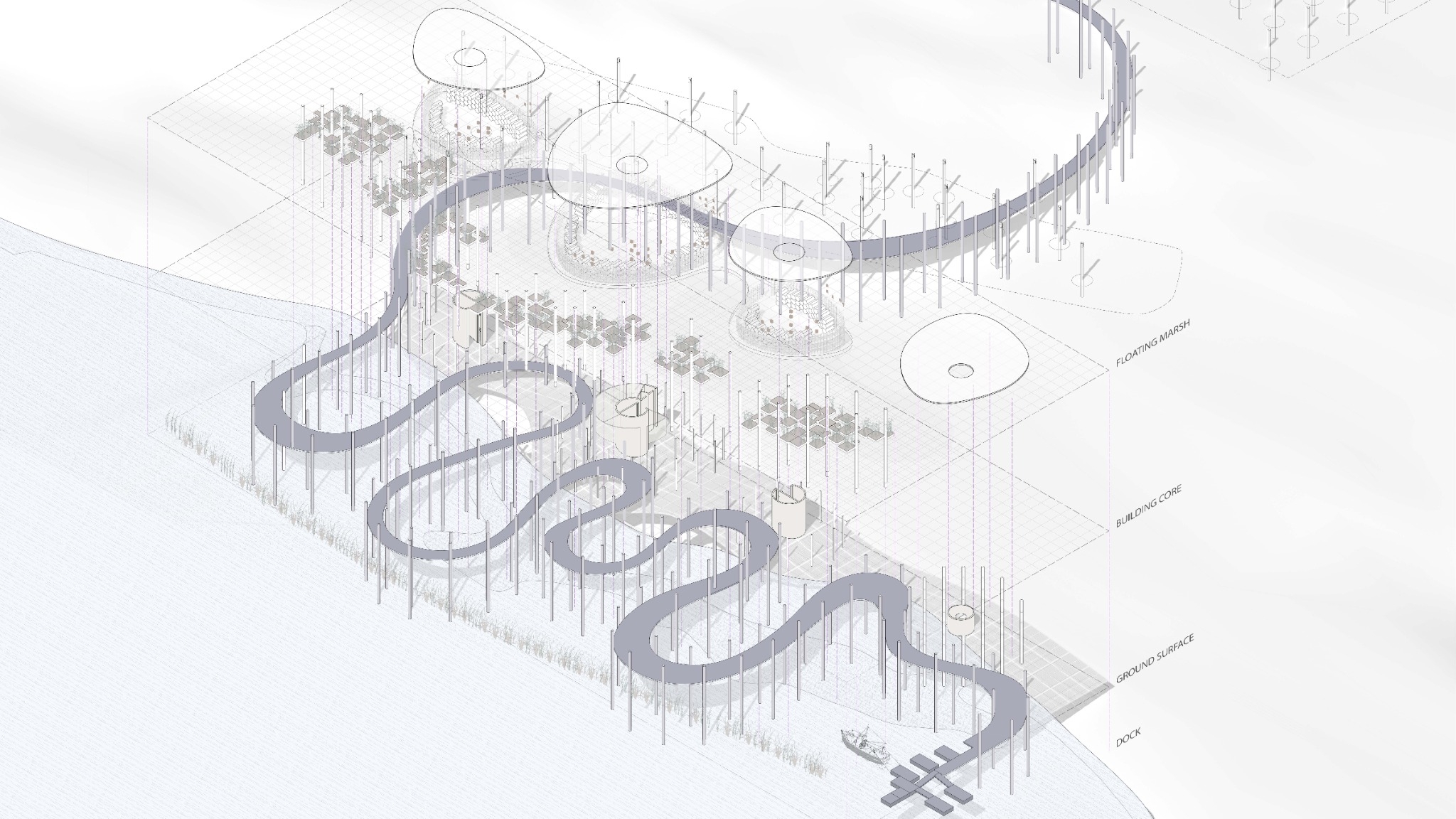
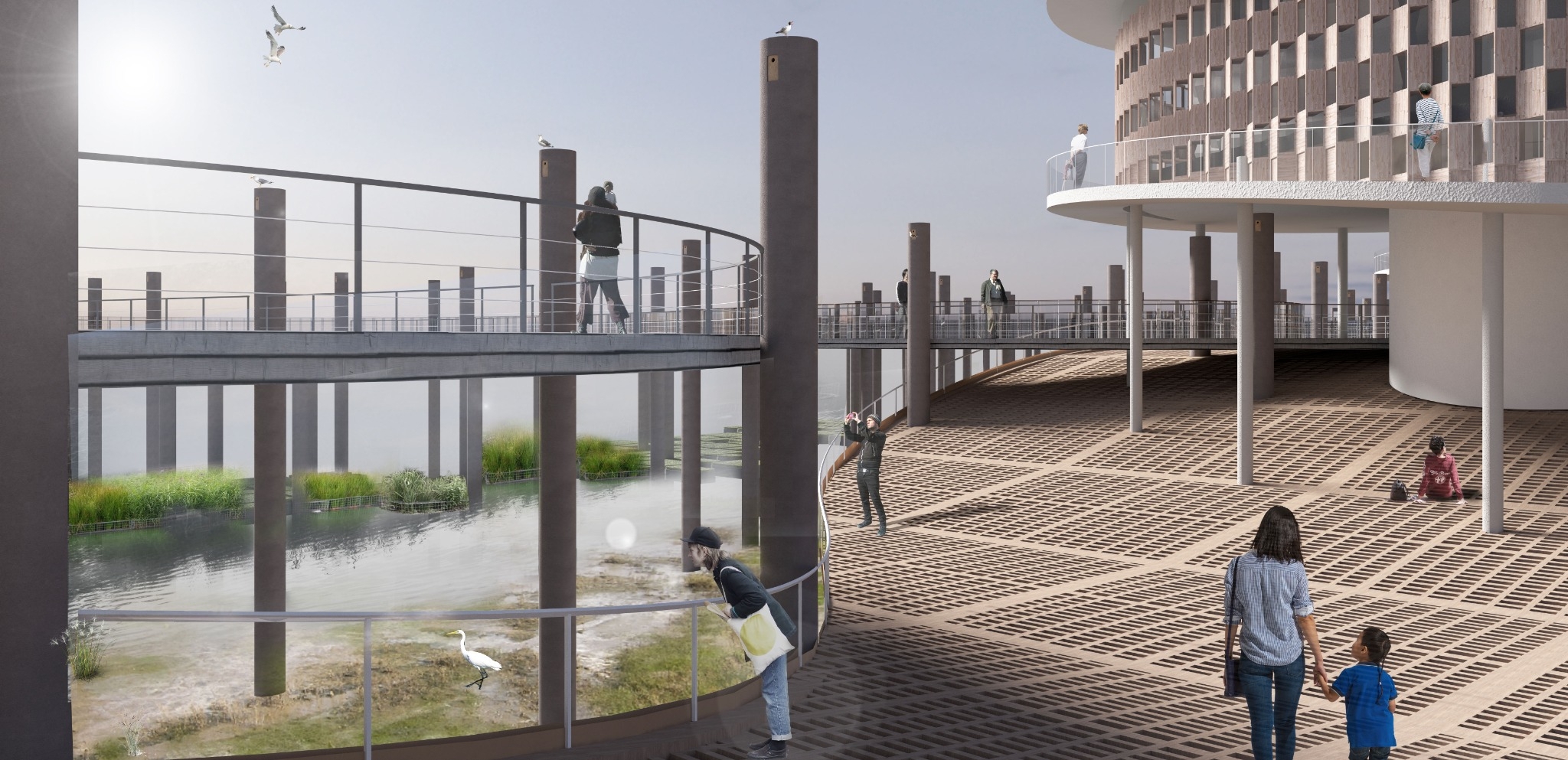
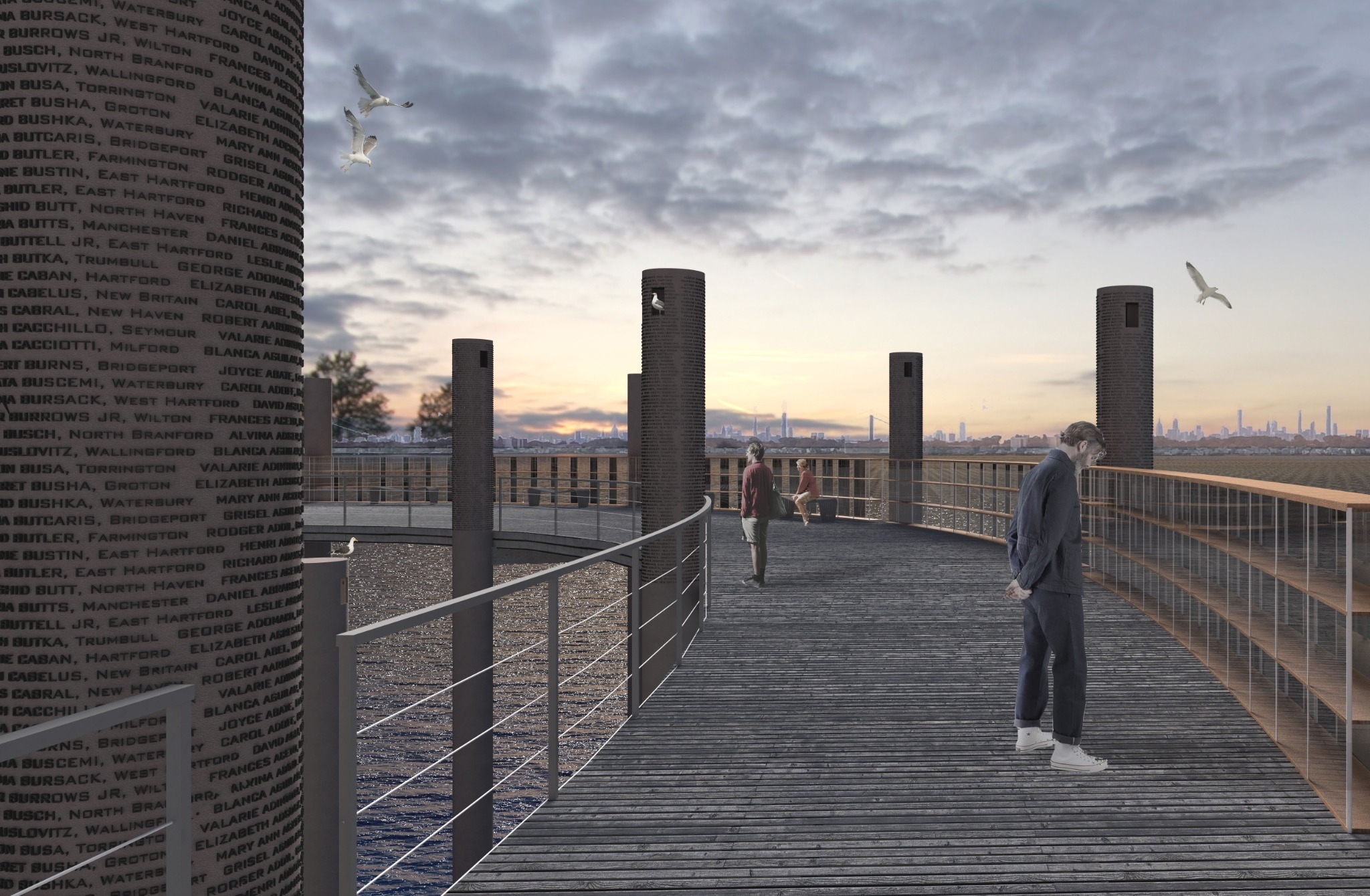
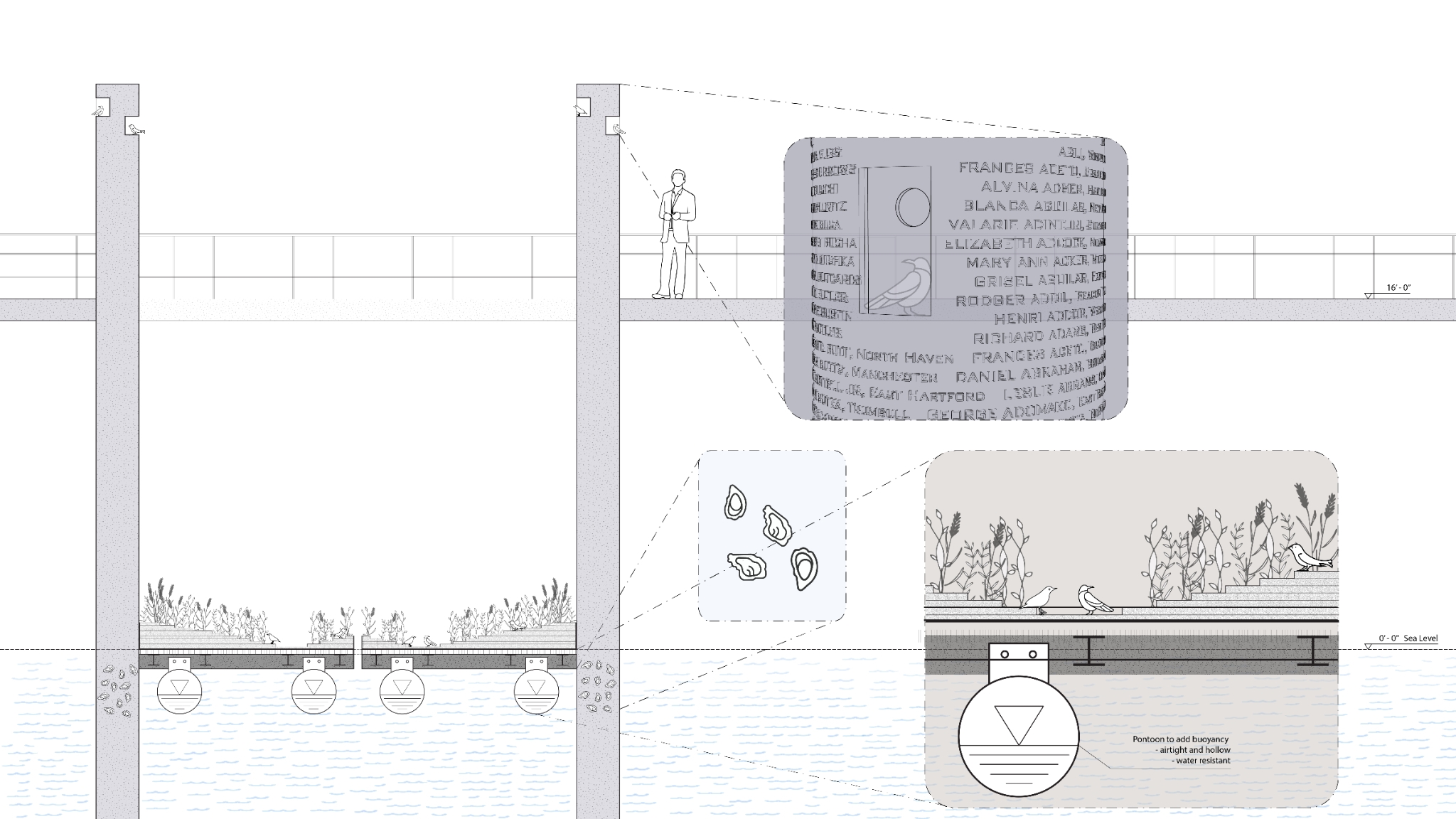
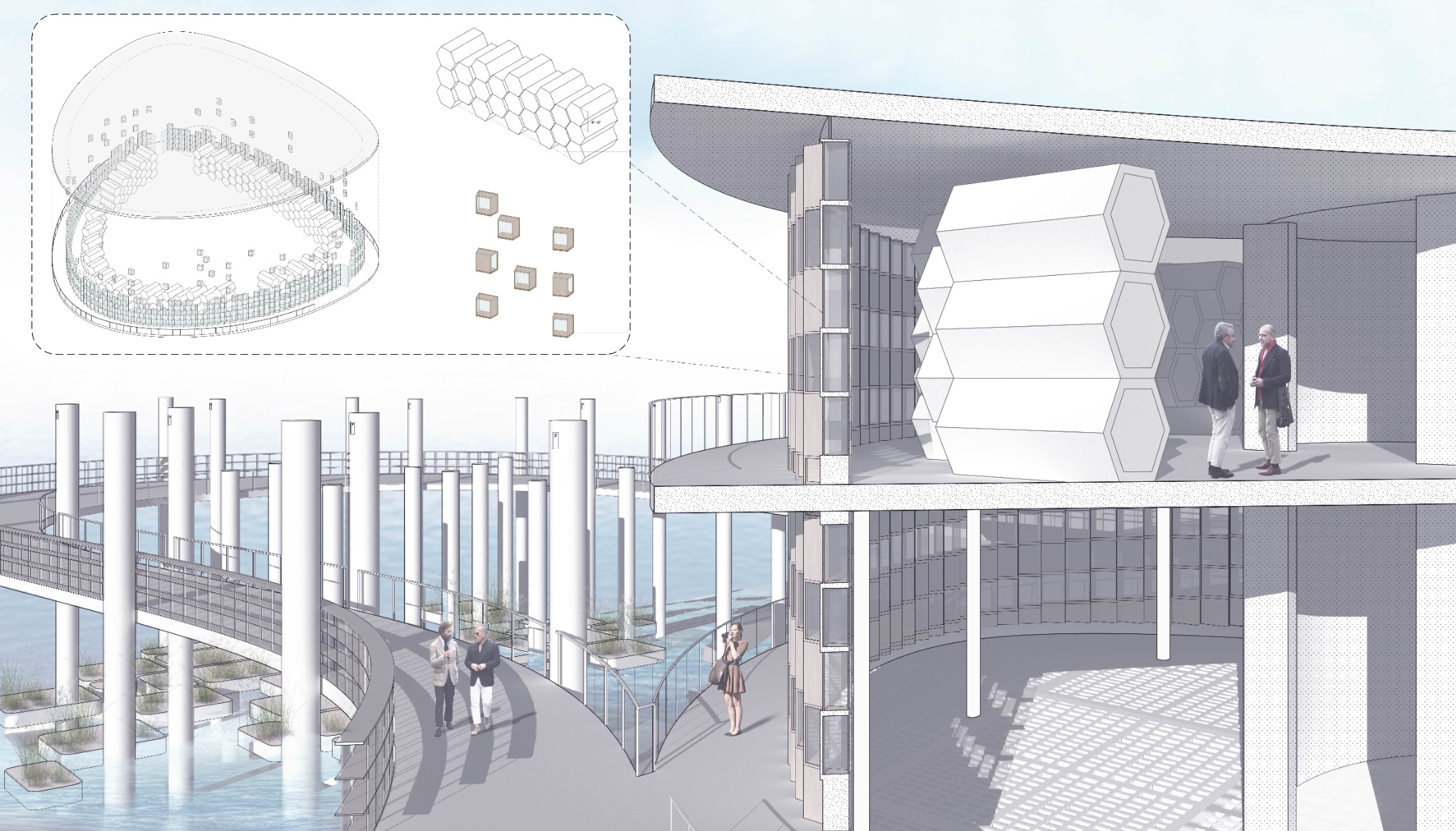
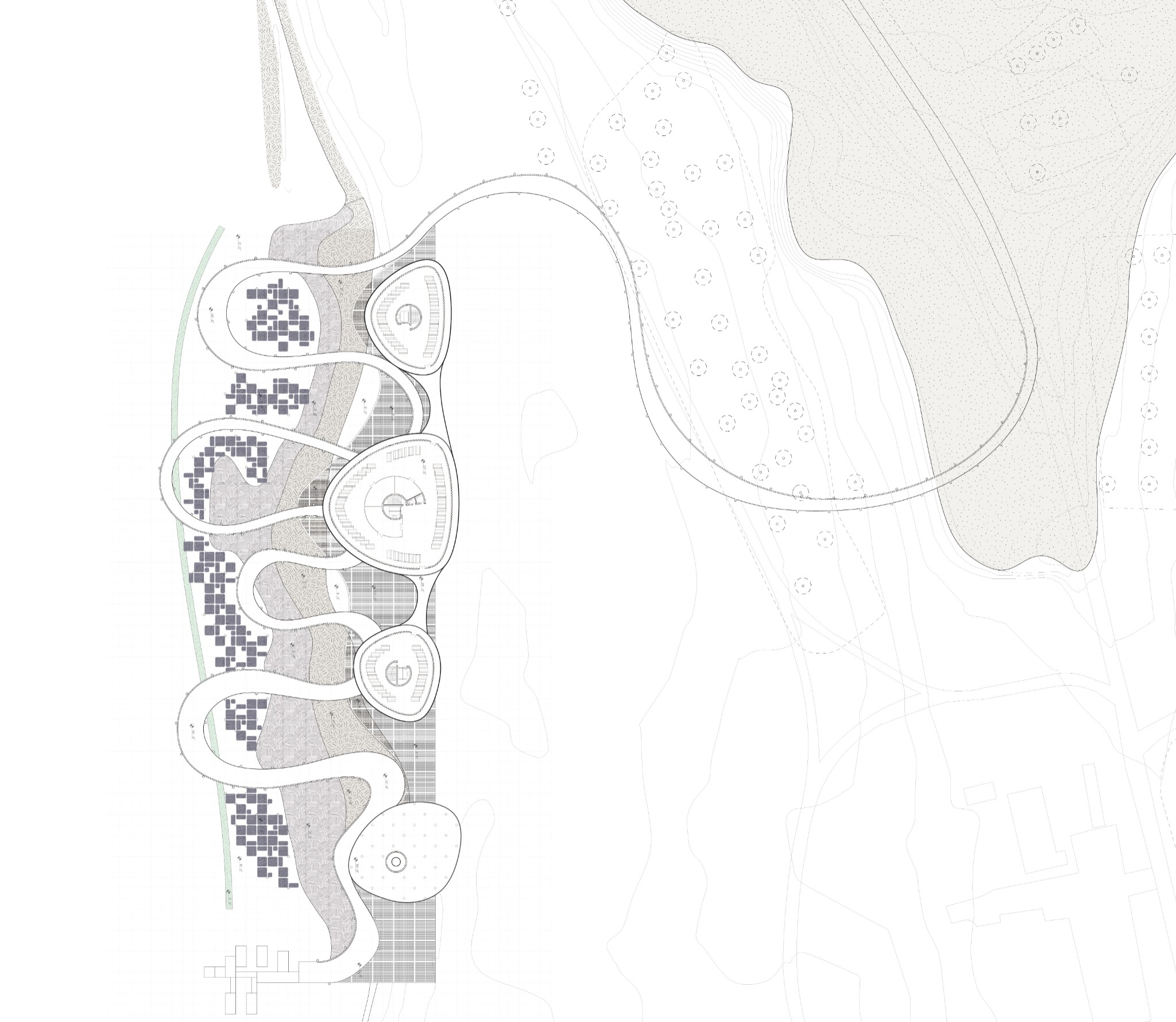
Three elements are proposed: columns, walkways, and buildings. Each column includes a bird’s nest at the top, names of the deceased on the surface, and underwater surfaces for mussels to thrive. Between the columns, floating marsh structures move with tides and can be transferred as sea levels rise.
Three wooden buildings with flood-adaptive slits provide gathering space. Over two thousand compostings happen on site each year. Each body is placed in a cradle, set in a vessel, covered with plant material for 30 days, and transformed into one cubic yard of soil. A small portion is placed in commemorative boxes along the facade. A fluid elevated footpath connects memorials, cemetery structures, water, and wildlife.