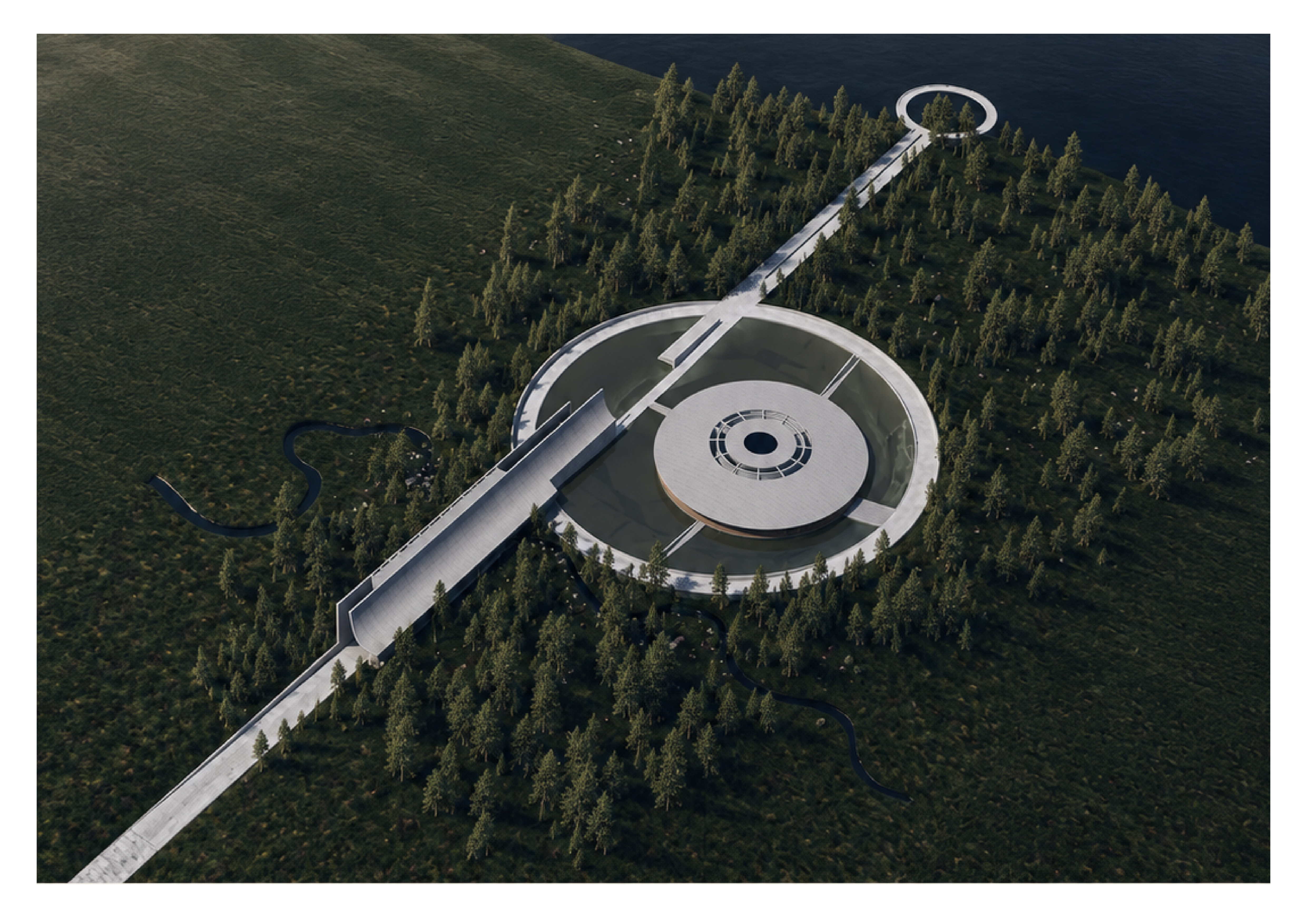
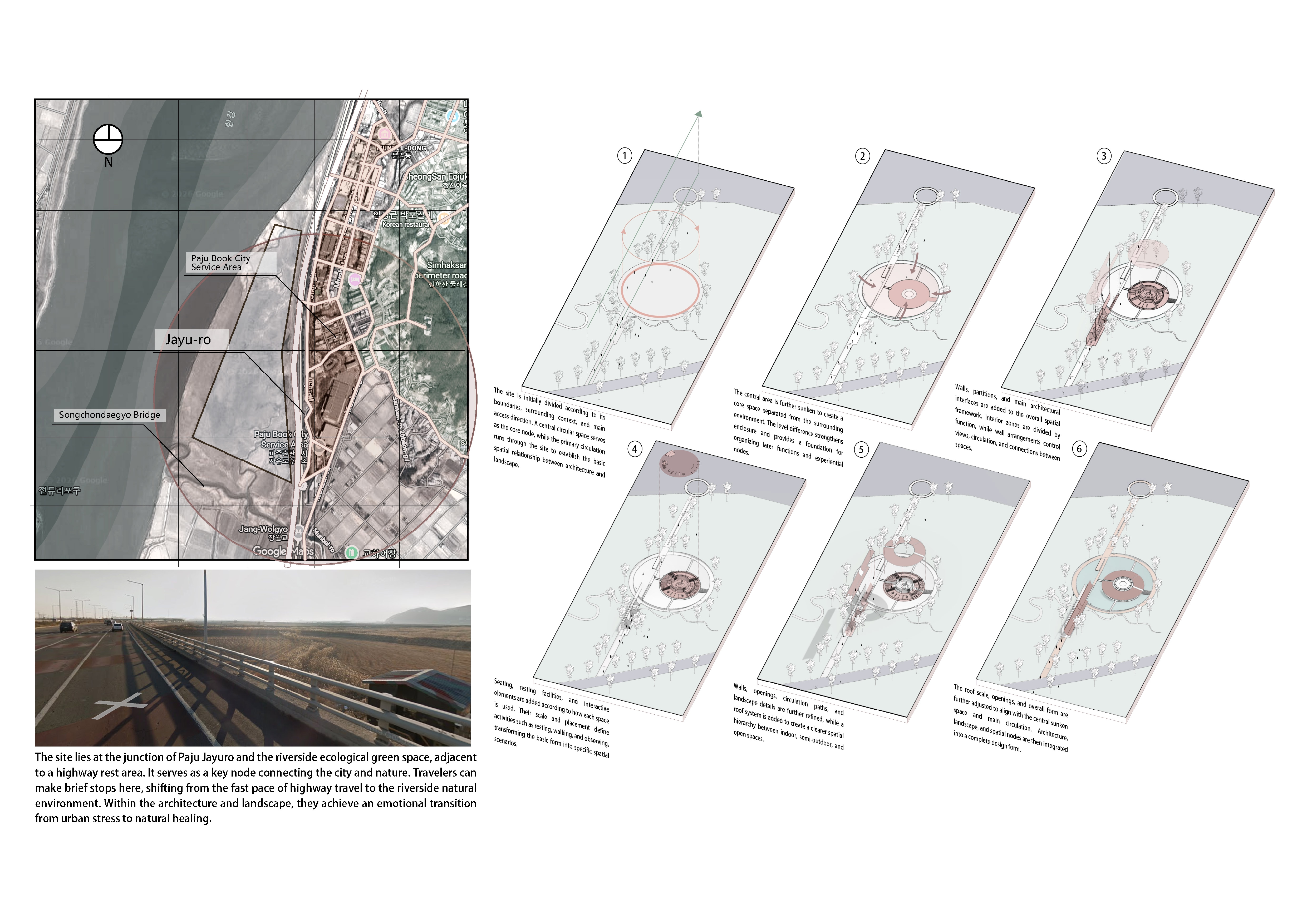
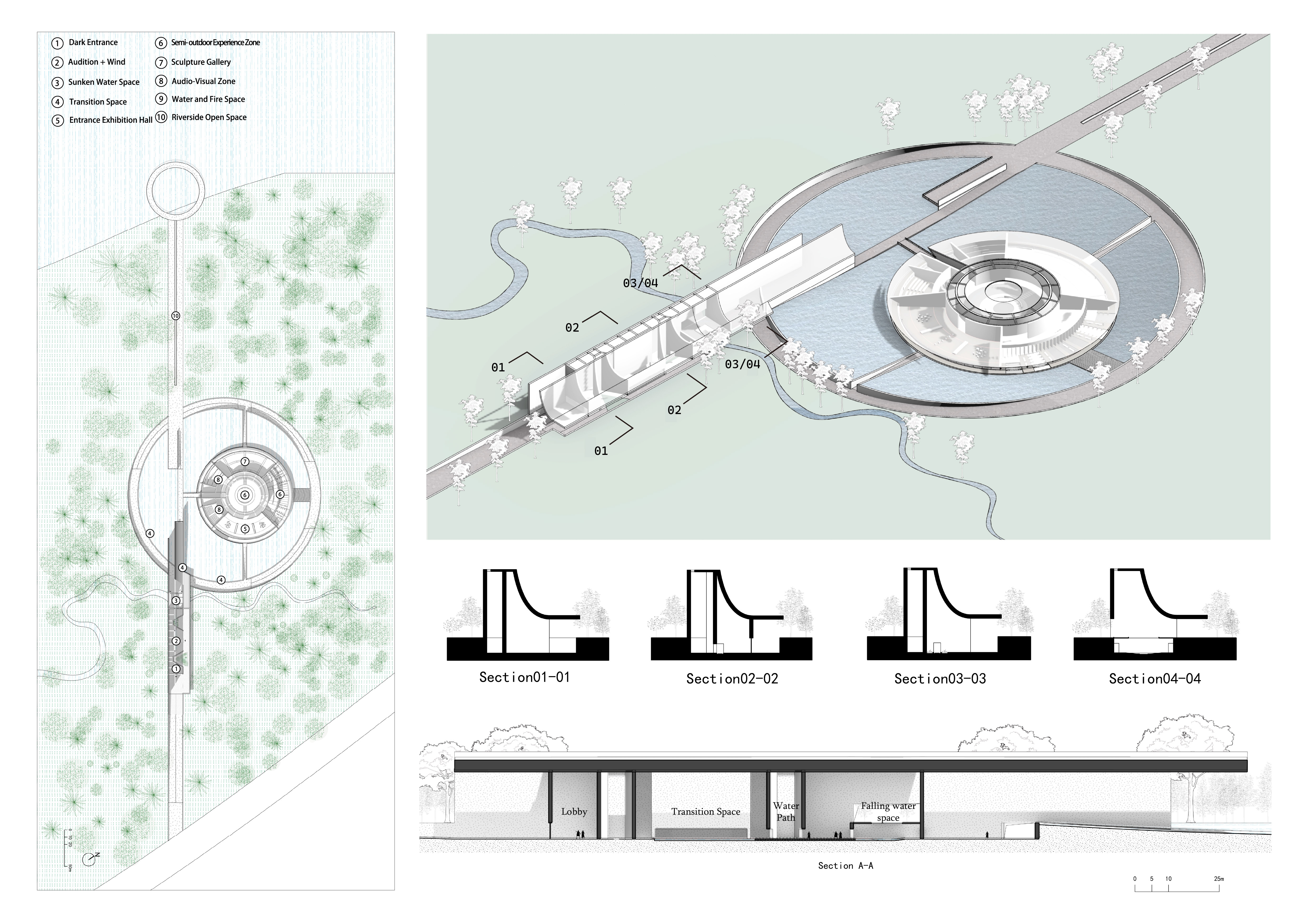
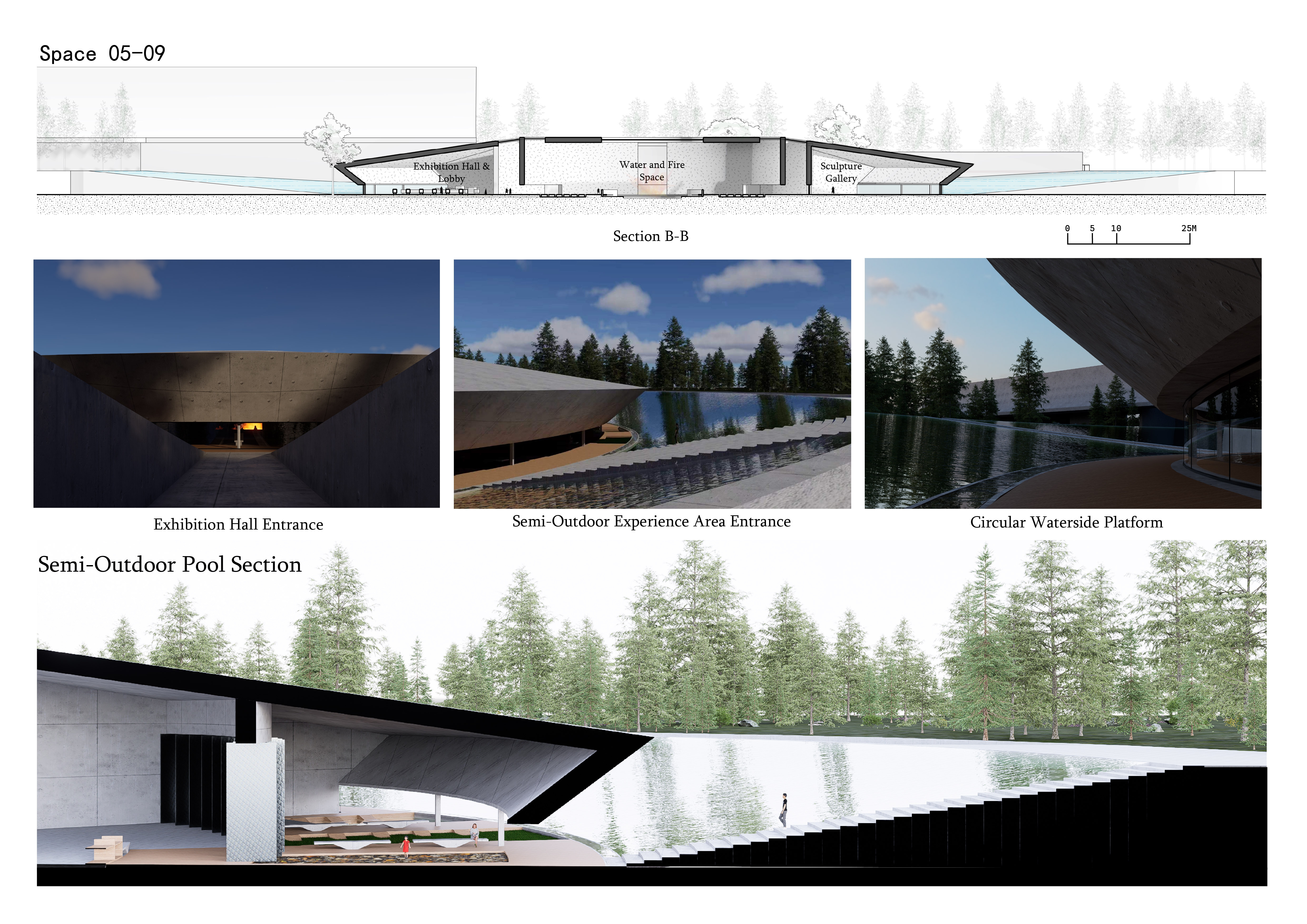
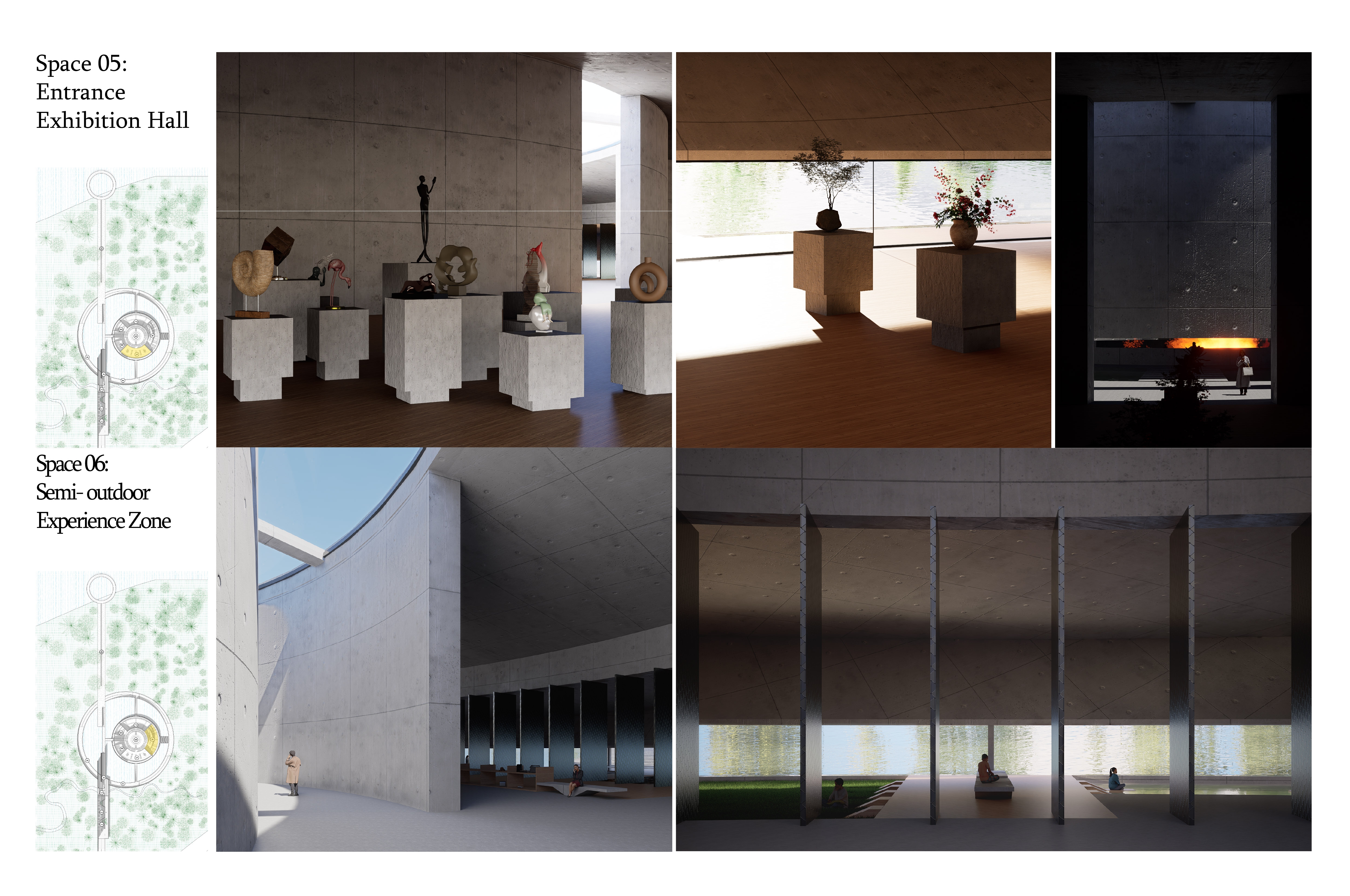
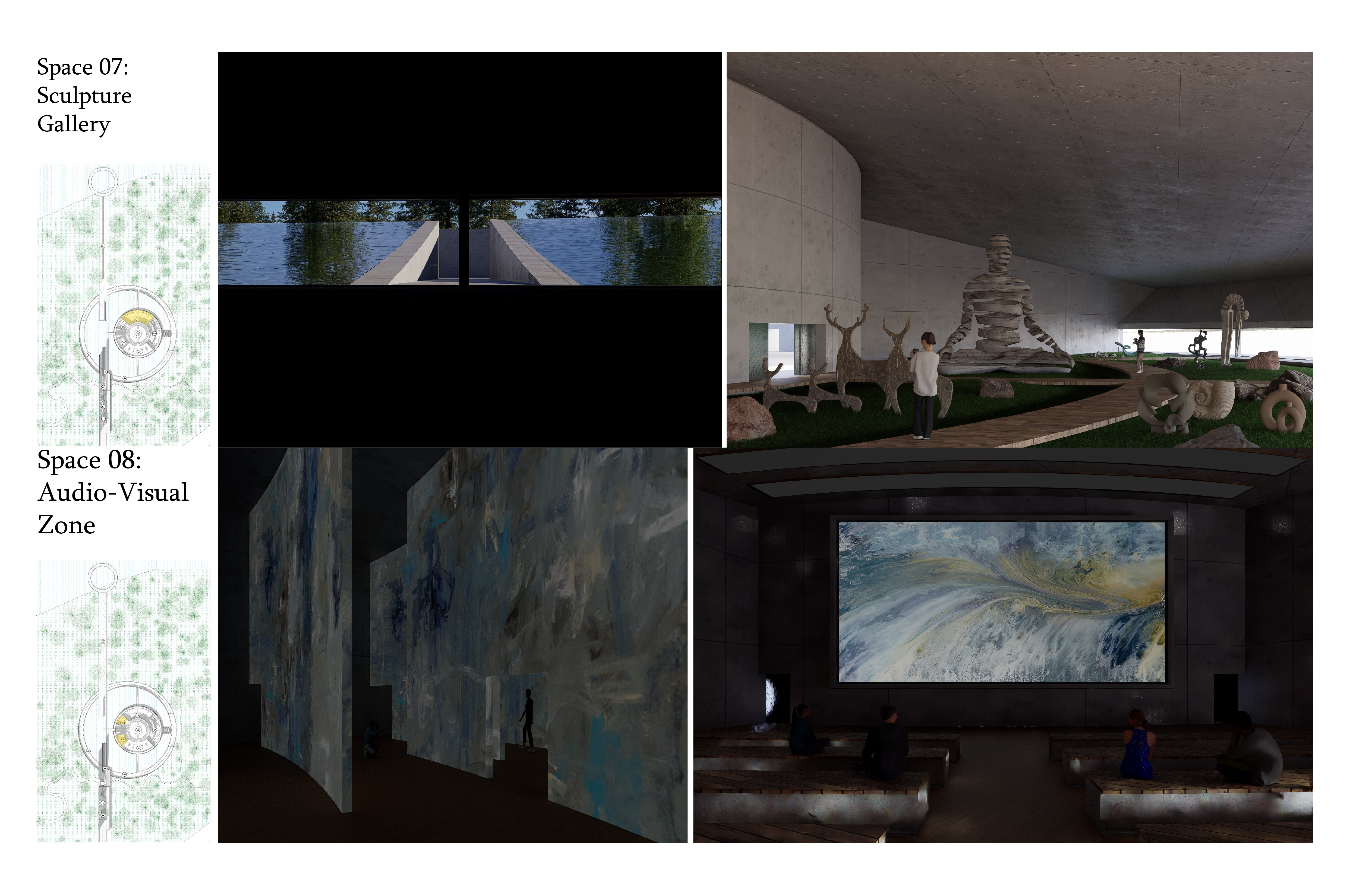
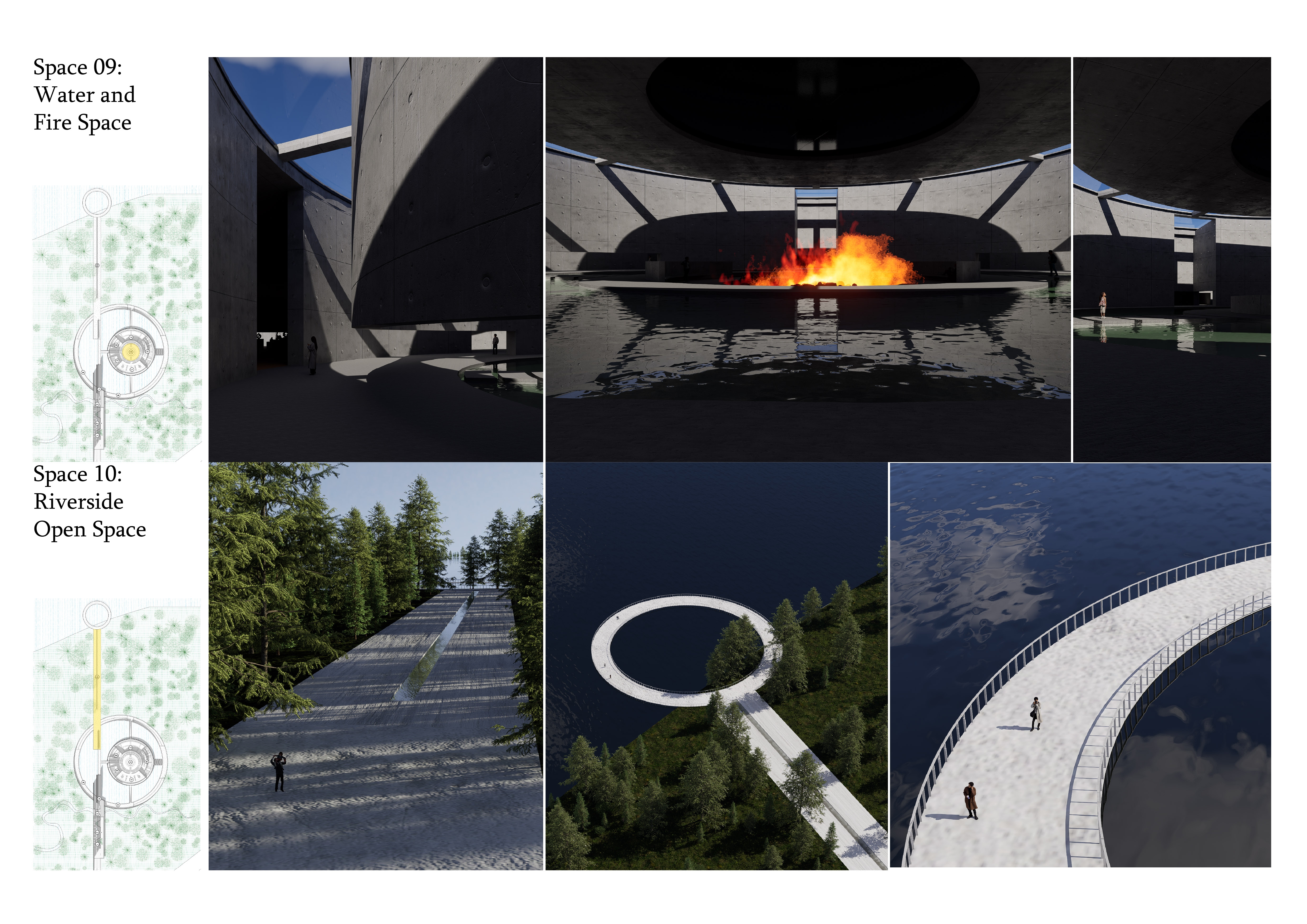
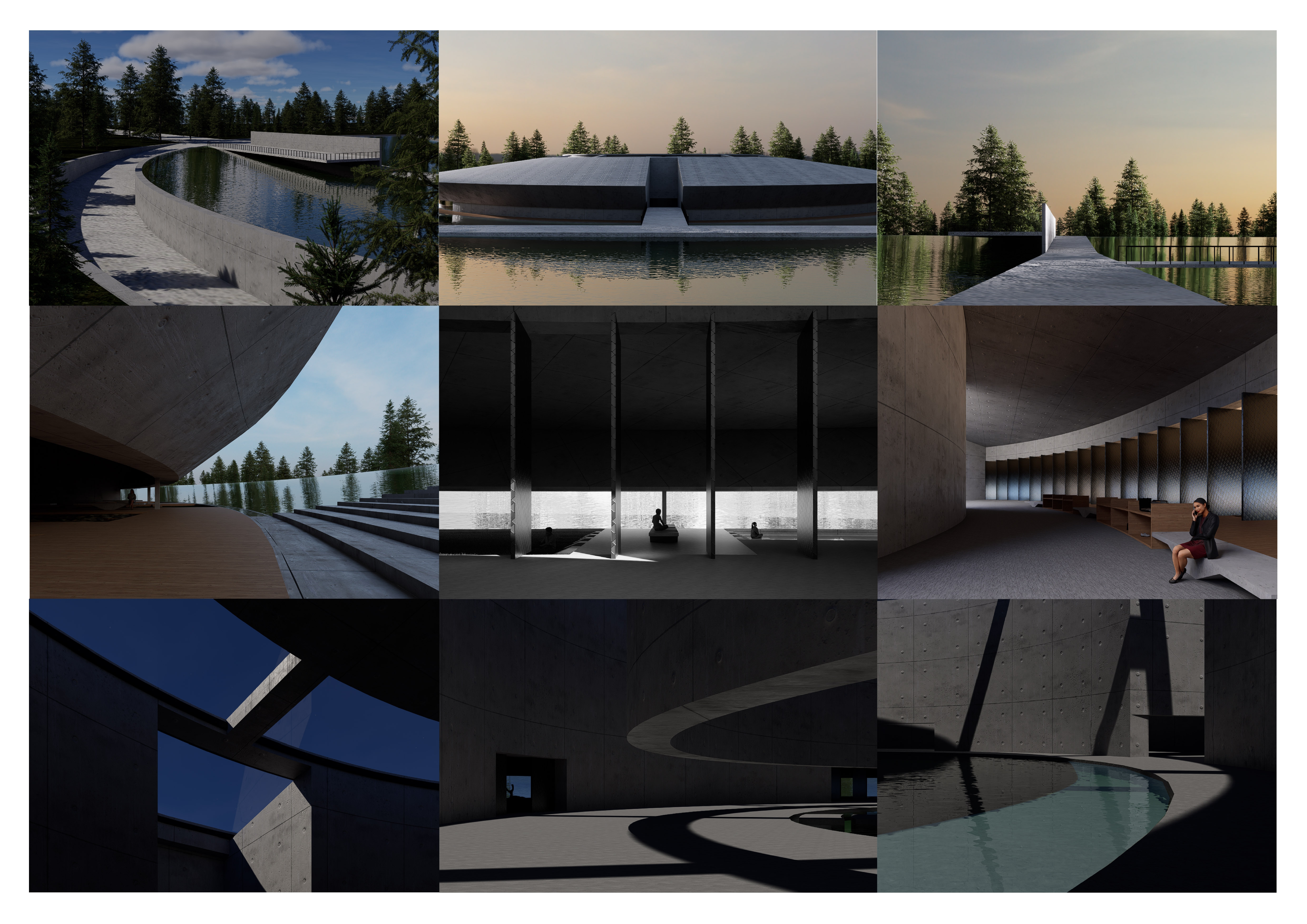
Stress as an Urban Condition is a public building in Seoul, South Korea, addressing the psychological pressure of high-density urban life and the limits of existing public spaces in supporting deeper recovery. Located between the city and a riverside ecological green zone, the site enables a transition from high urban stimulation to a lower-stimulation natural setting. Drawing on environmental stress theory, sensory overload theory, and environmental psychology, the design treats vision, hearing, smell, touch, and bodily perception as spatial variables.
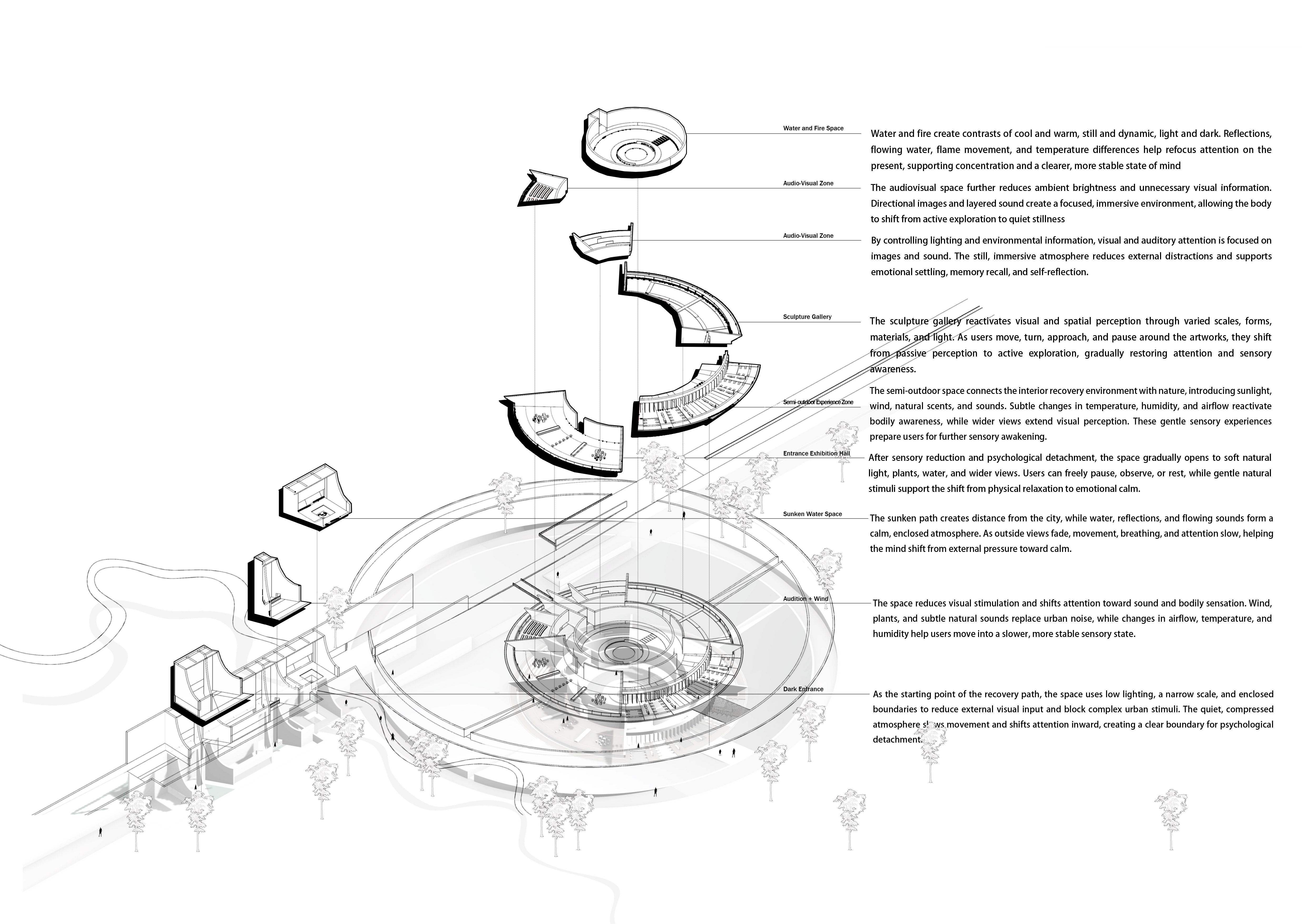
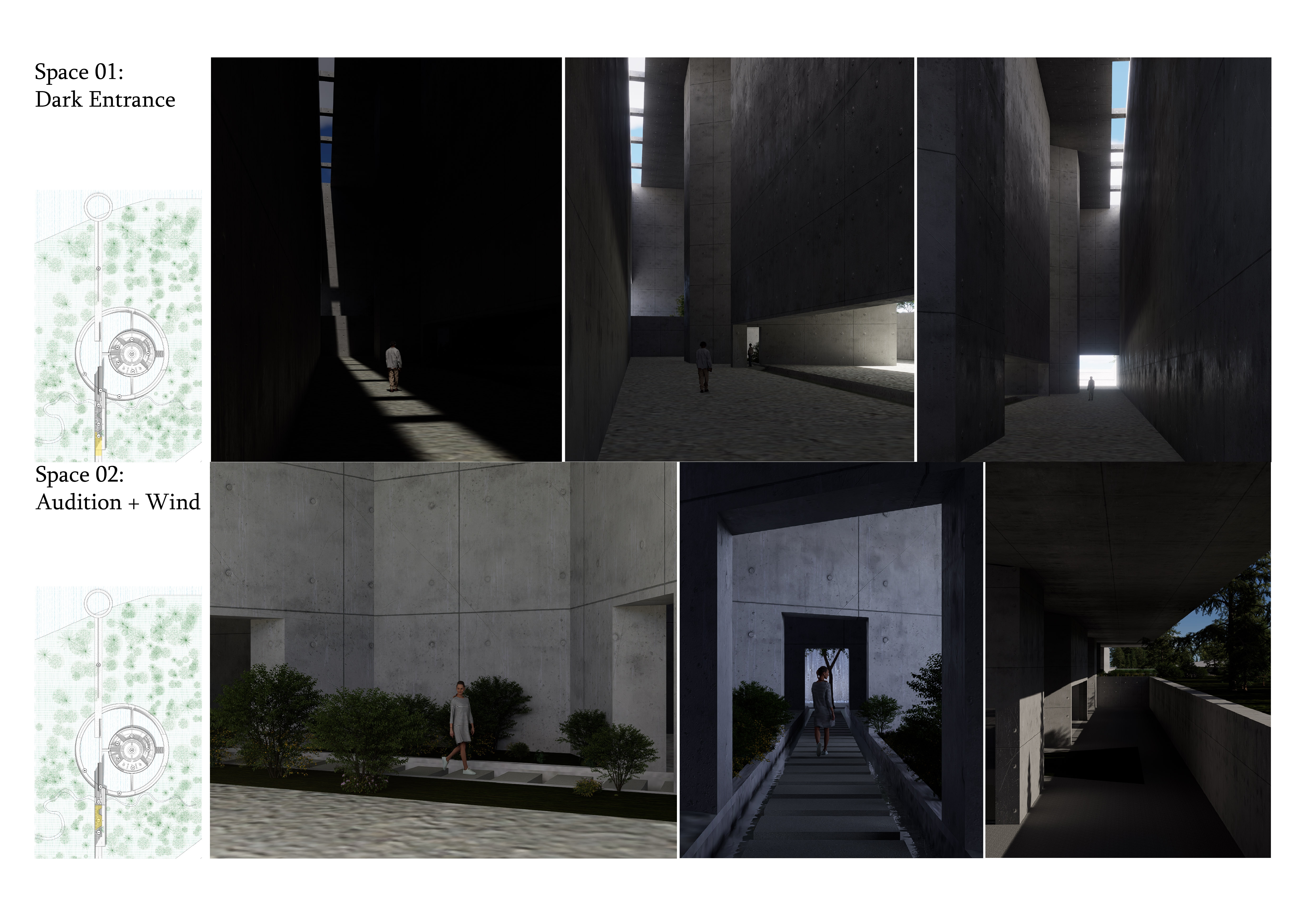
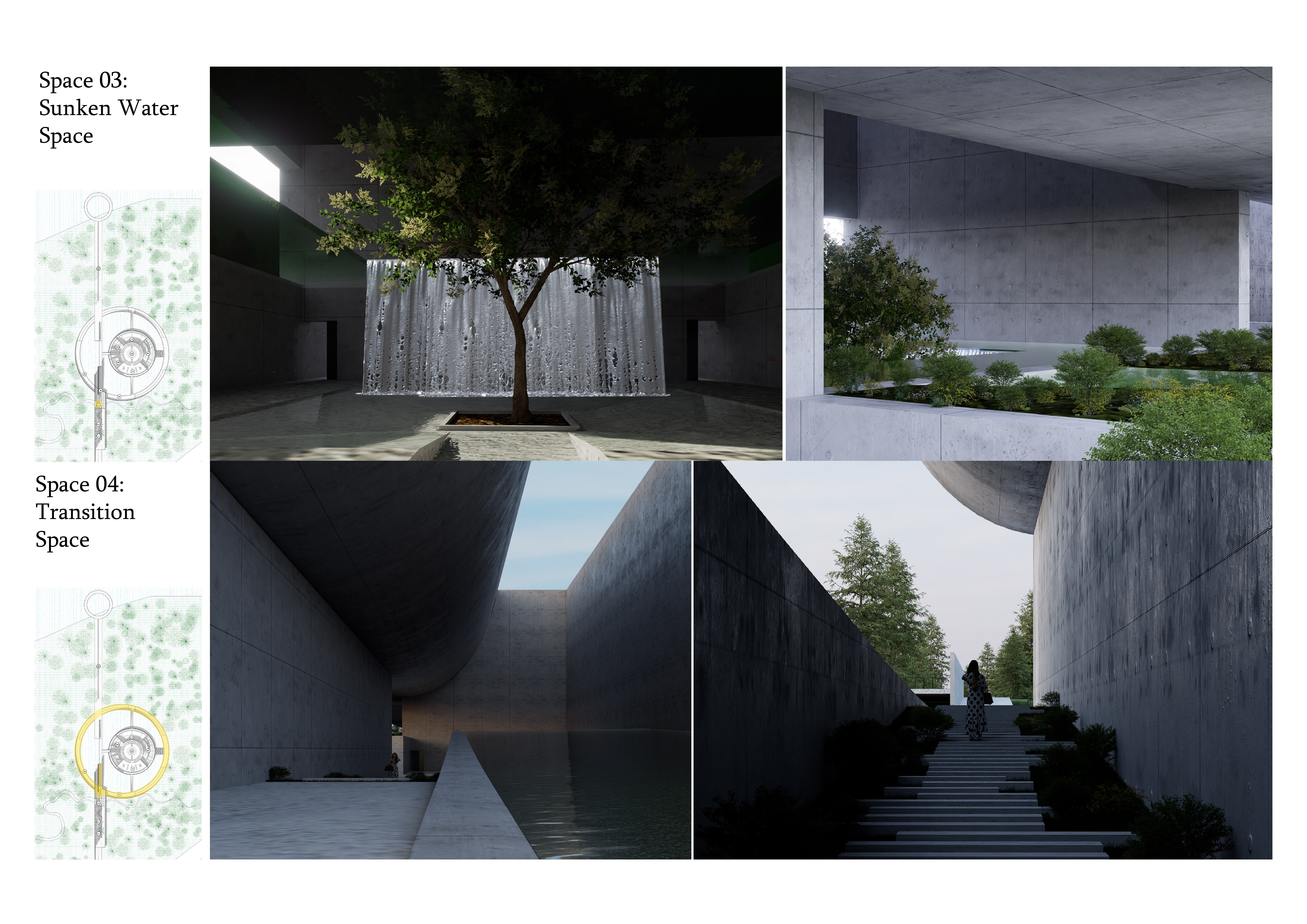
A continuous spatial-emotional pathway guides users from sensory isolation and psychological detachment toward physical relaxation, sensory awakening, reflection, and cognitive recovery. Narrow, dim spaces first reduce external stimuli; wind, water, humidity, natural sounds, soft light, vegetation, and natural materials restore bodily awareness. As spaces open and movement becomes autonomous, users shift from passive rest to active exploration. Audiovisual and water-and-fire spaces support reflection and cognitive recovery before the sequence ends in an open riverside landscape, reconnecting users with nature and everyday life.