
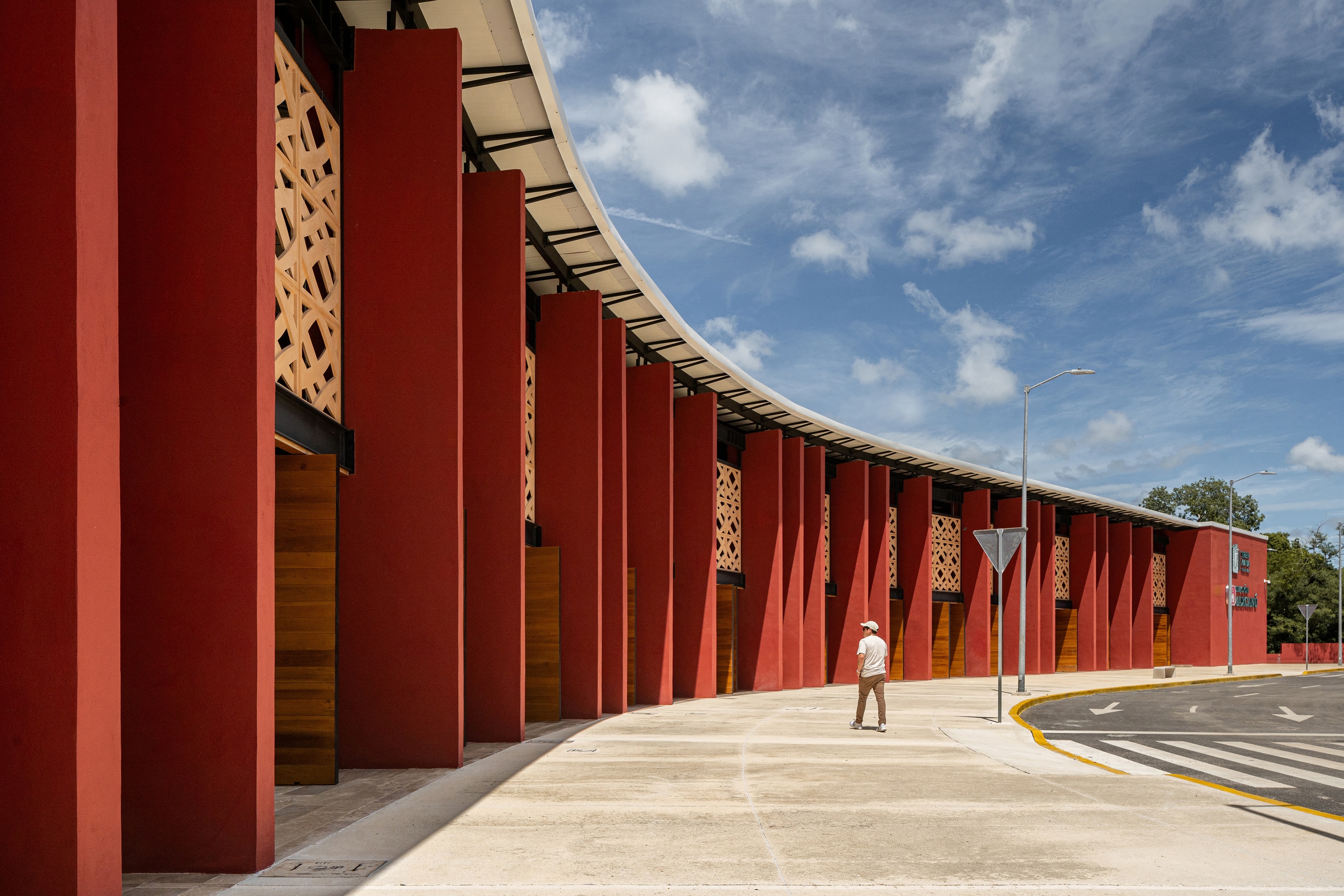
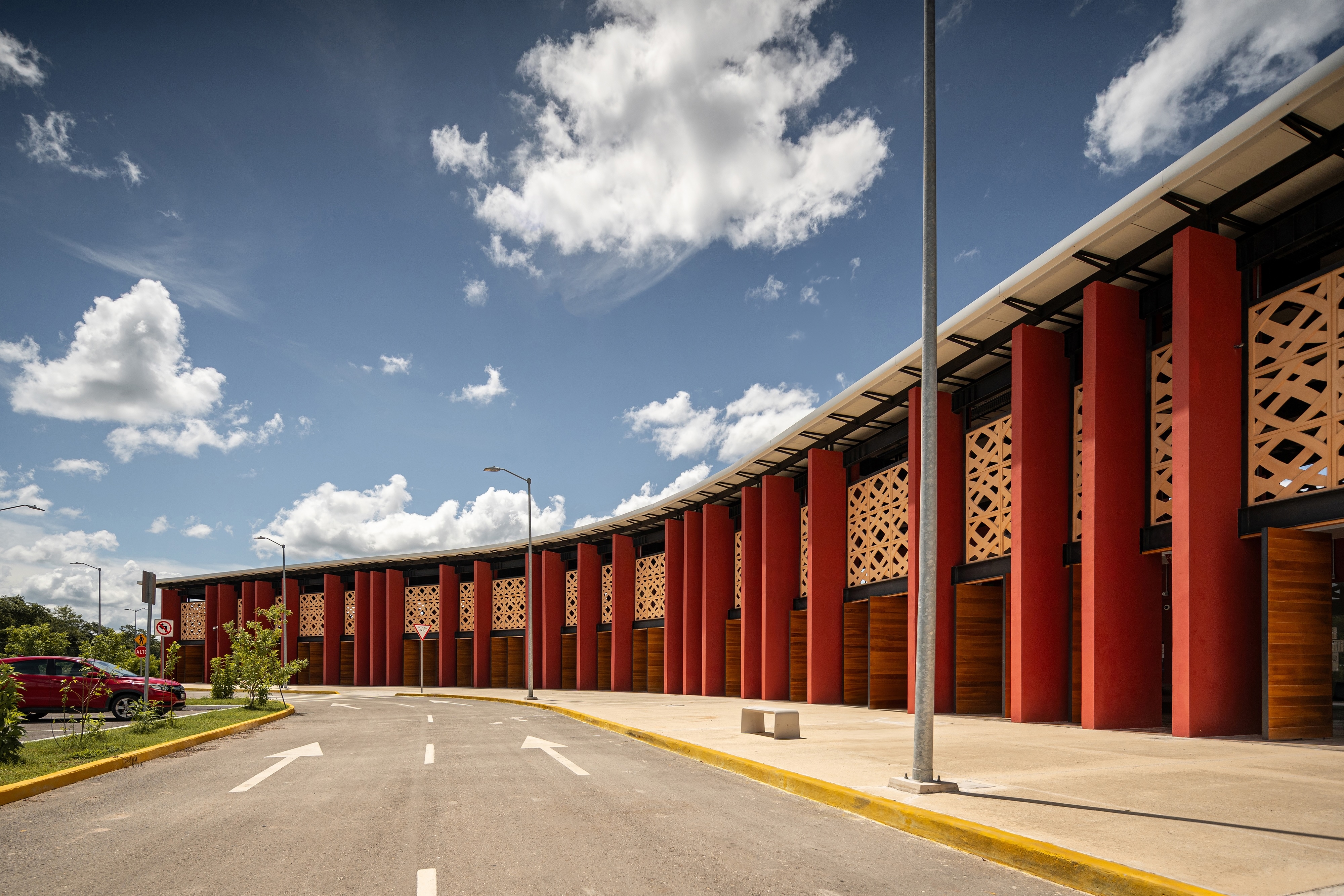
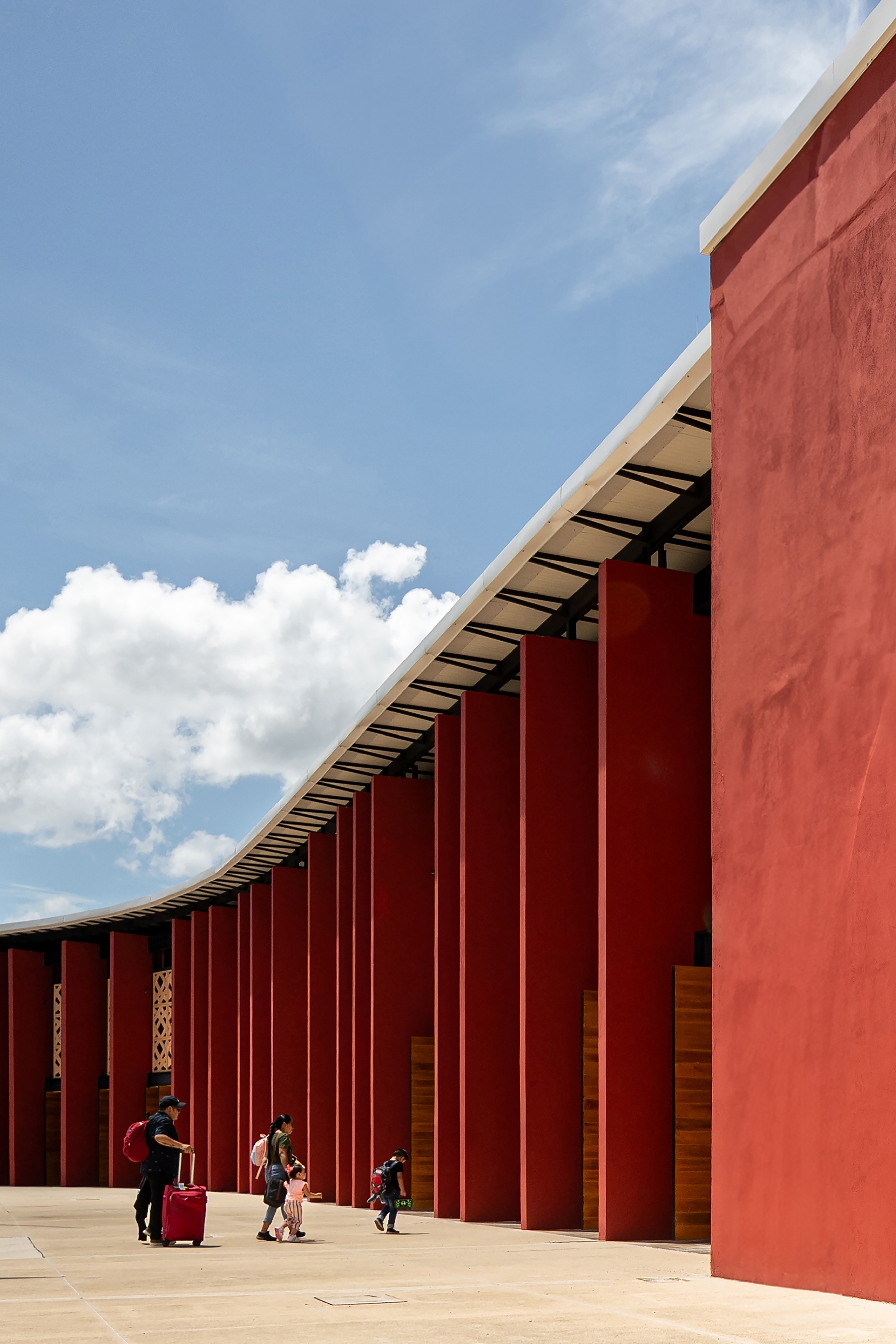
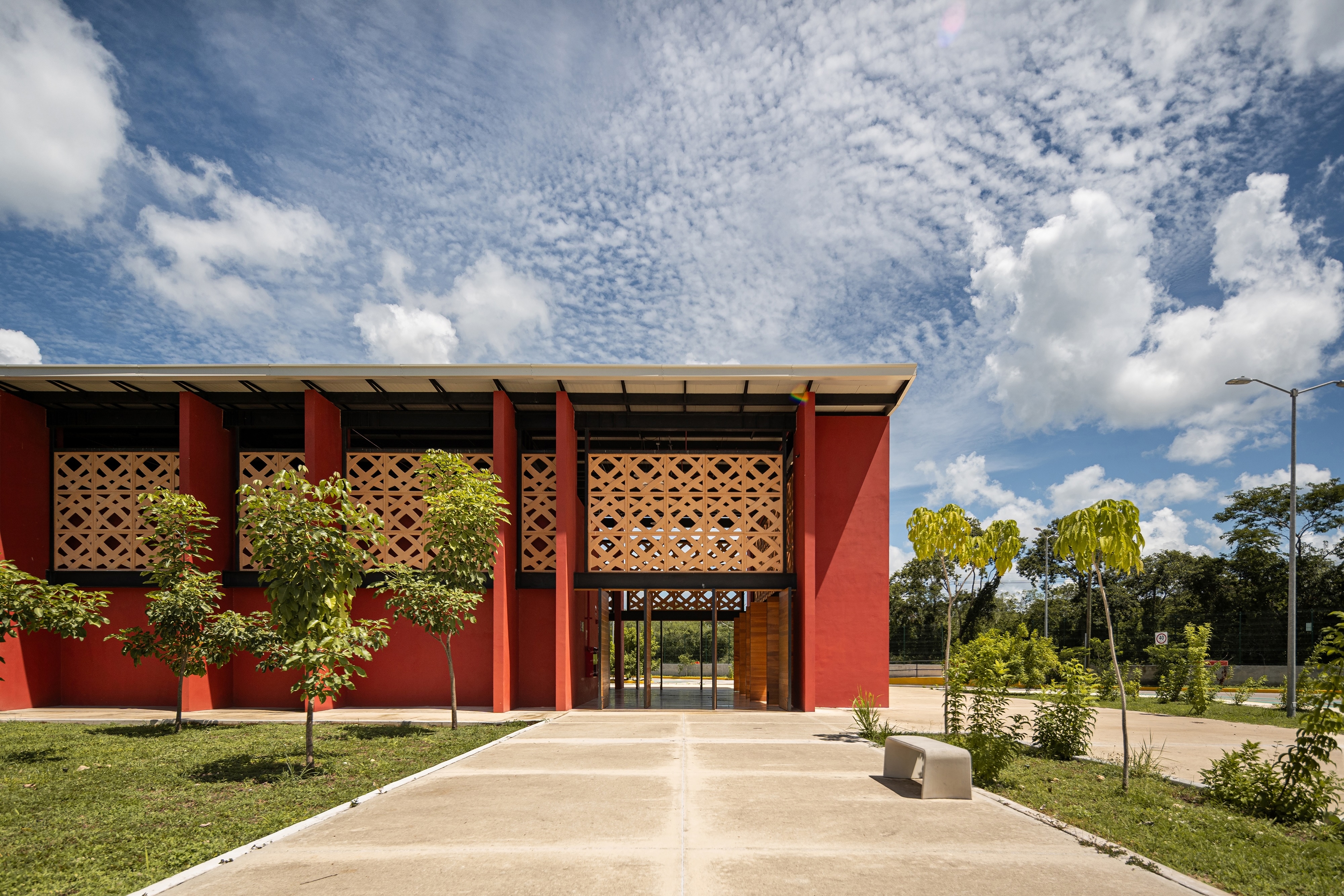
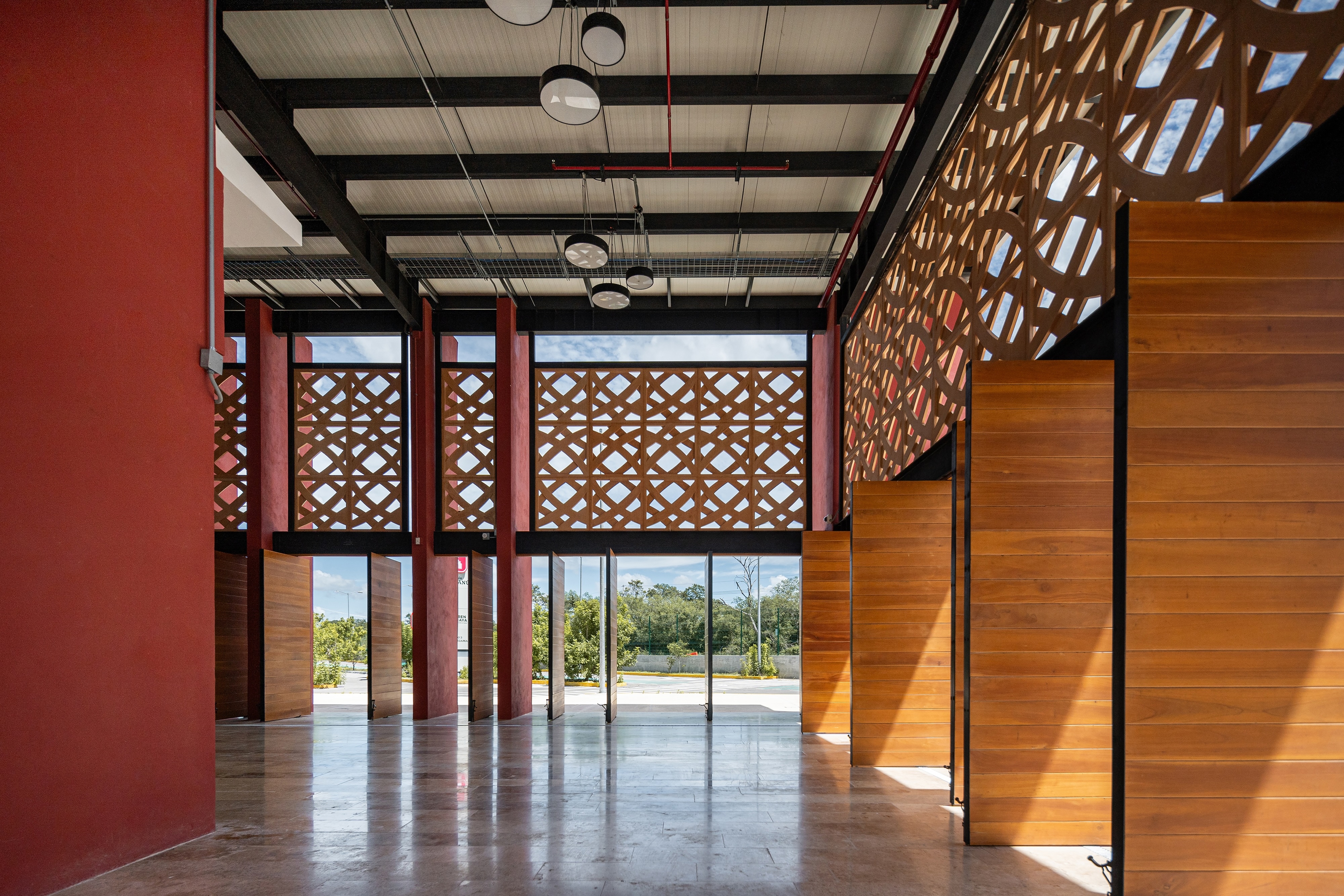
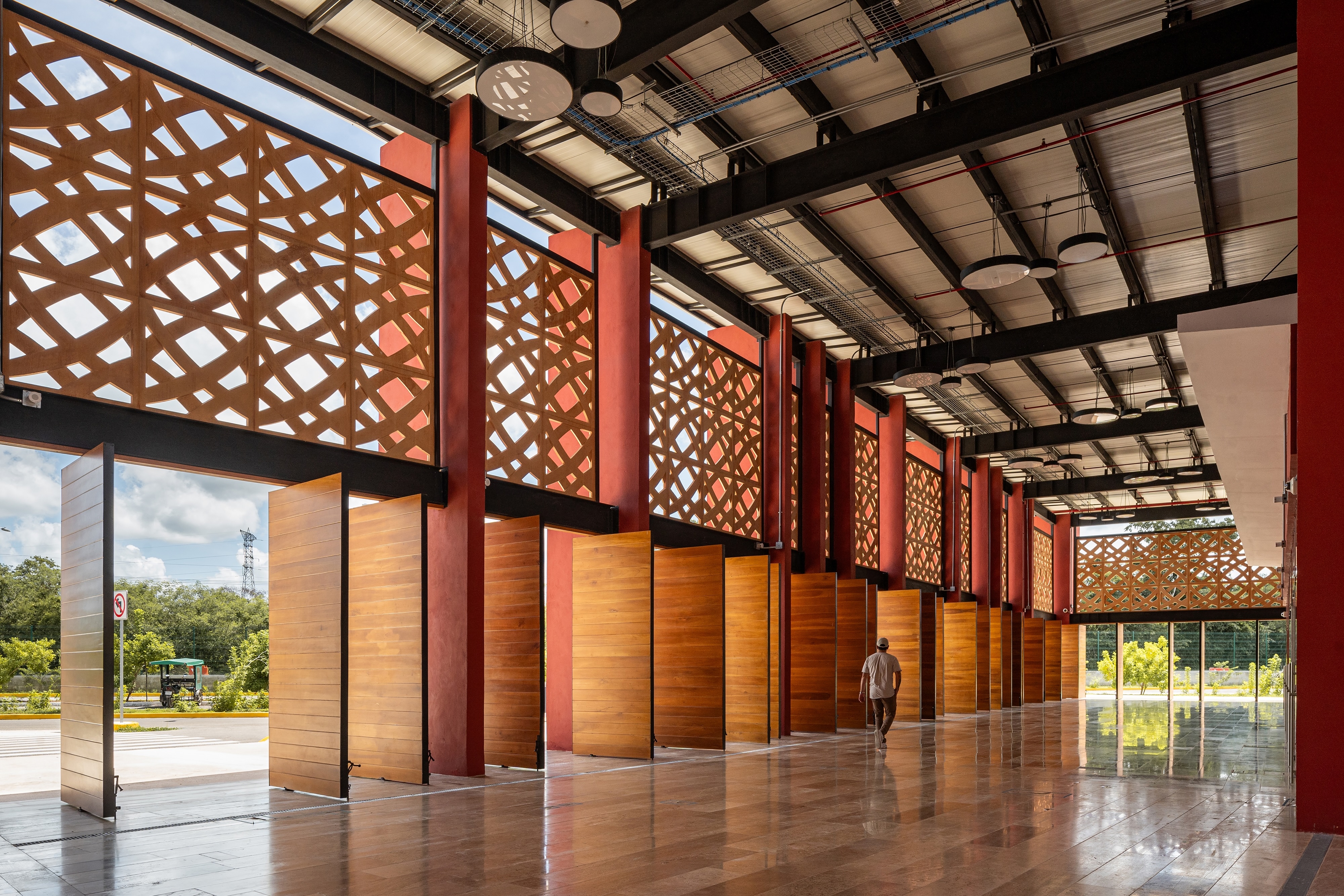
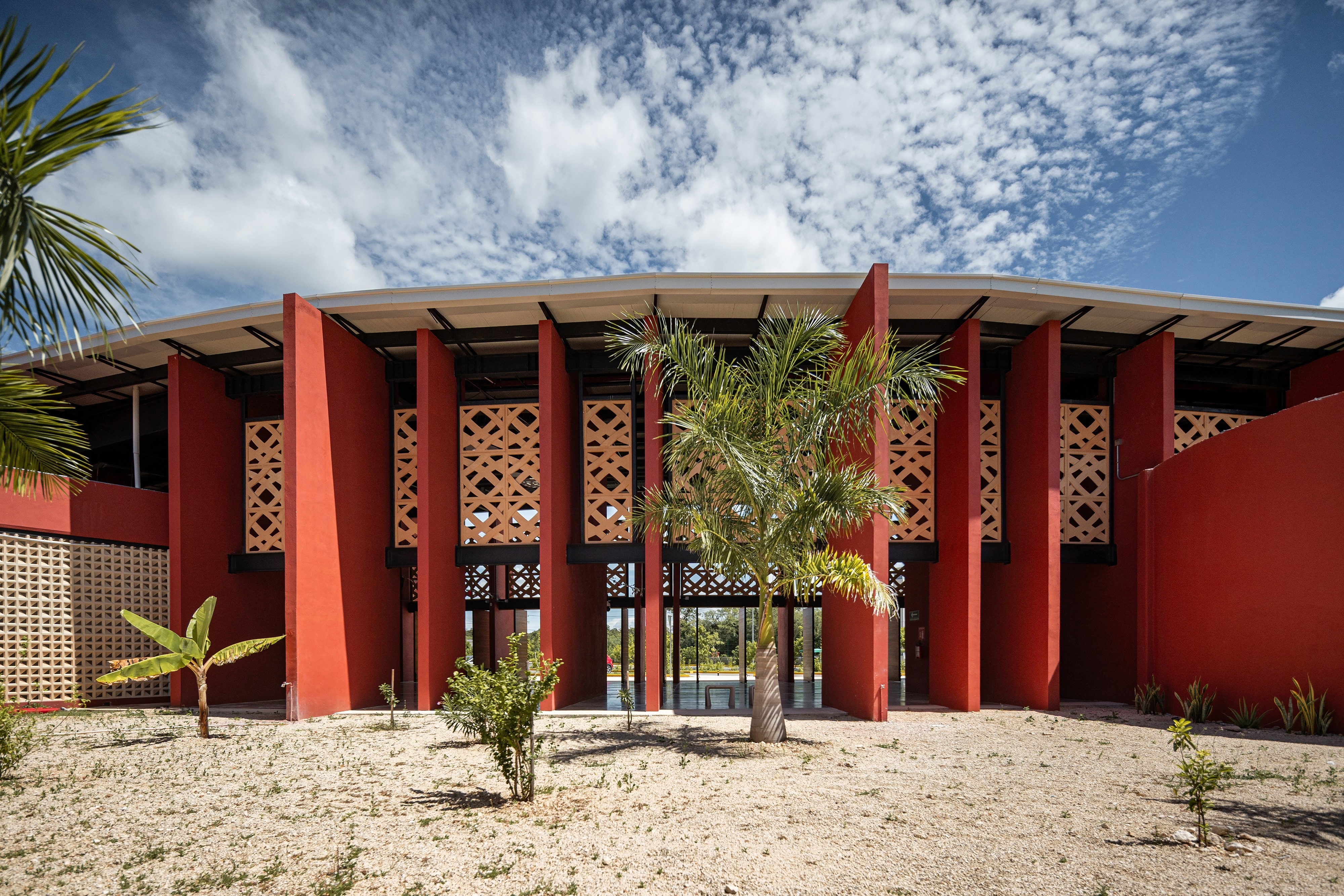
Maxcanú Station forms part of the Maya Train’s network in Yucatán, Mexico. The station transforms waiting into an experience of contemplation through architecture that embraces nature, light, and the terracotta tones of the nearby colonial town.
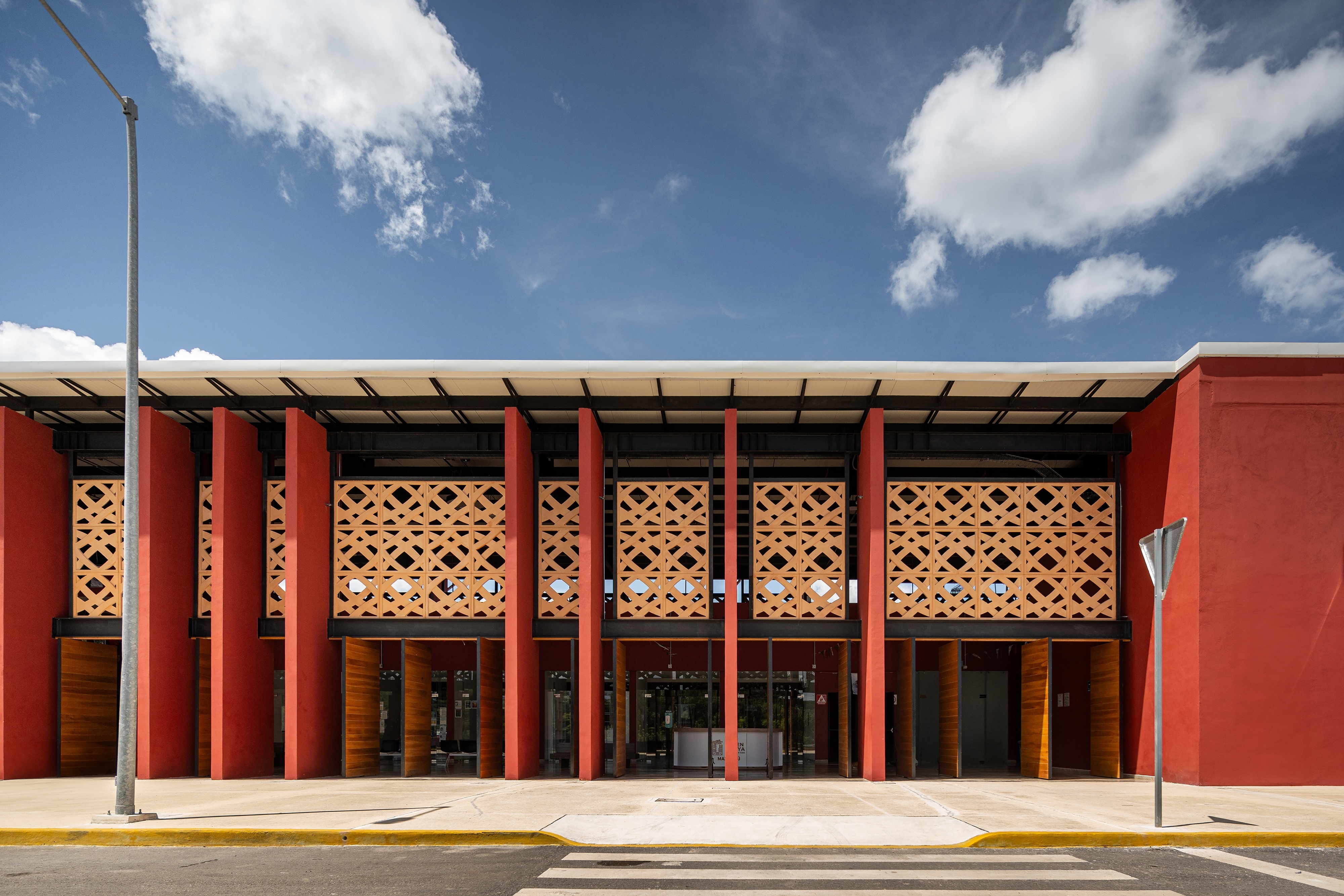
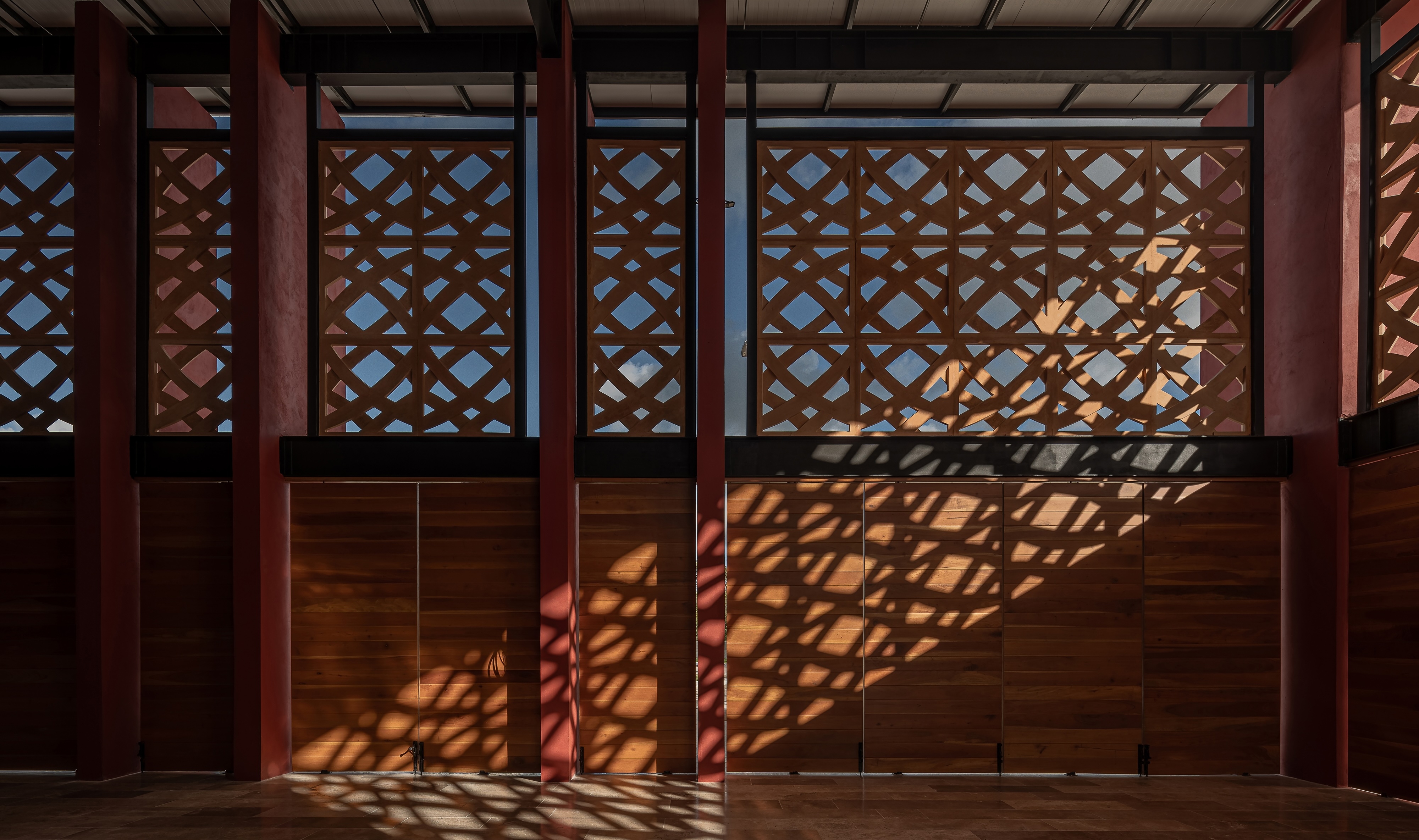
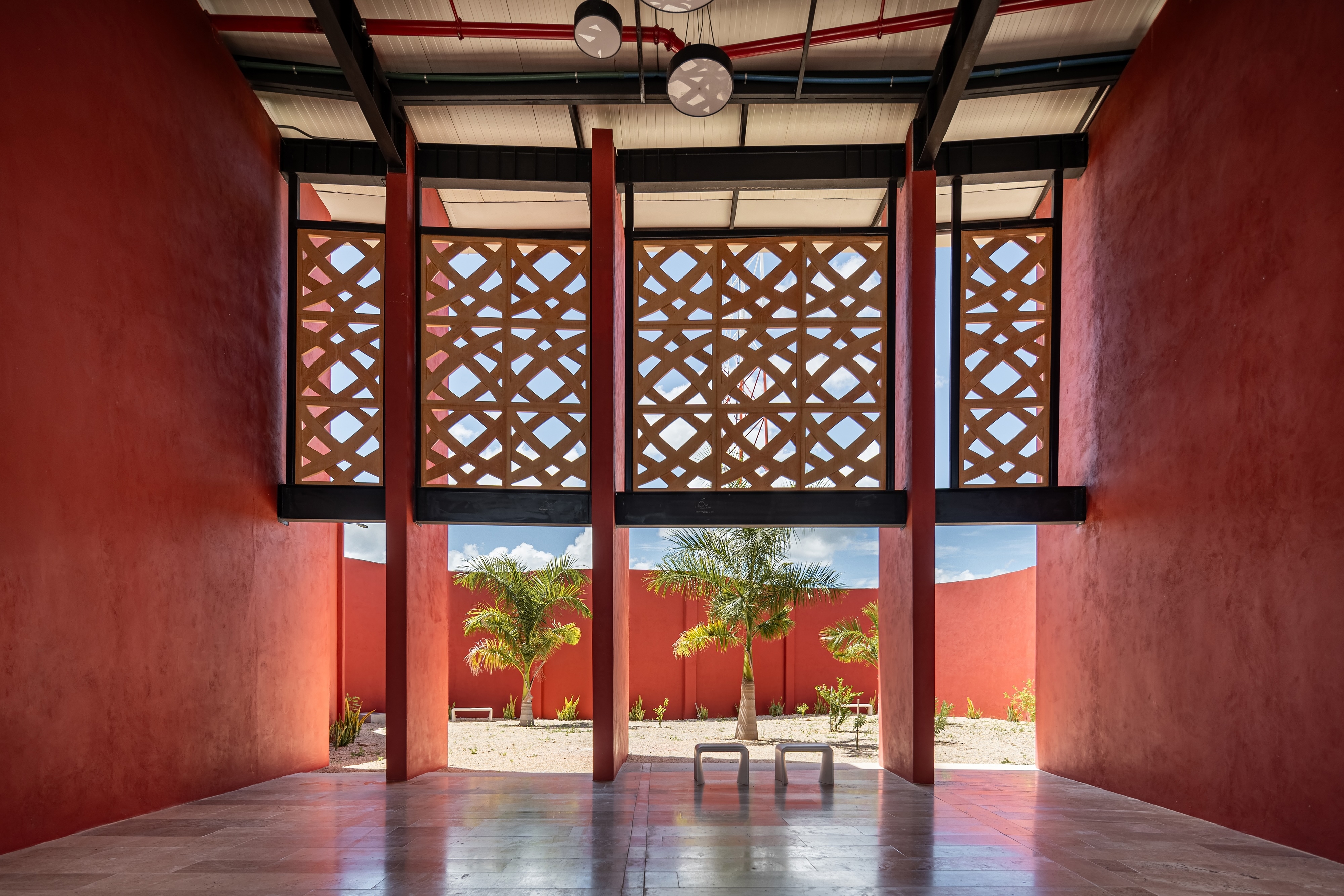
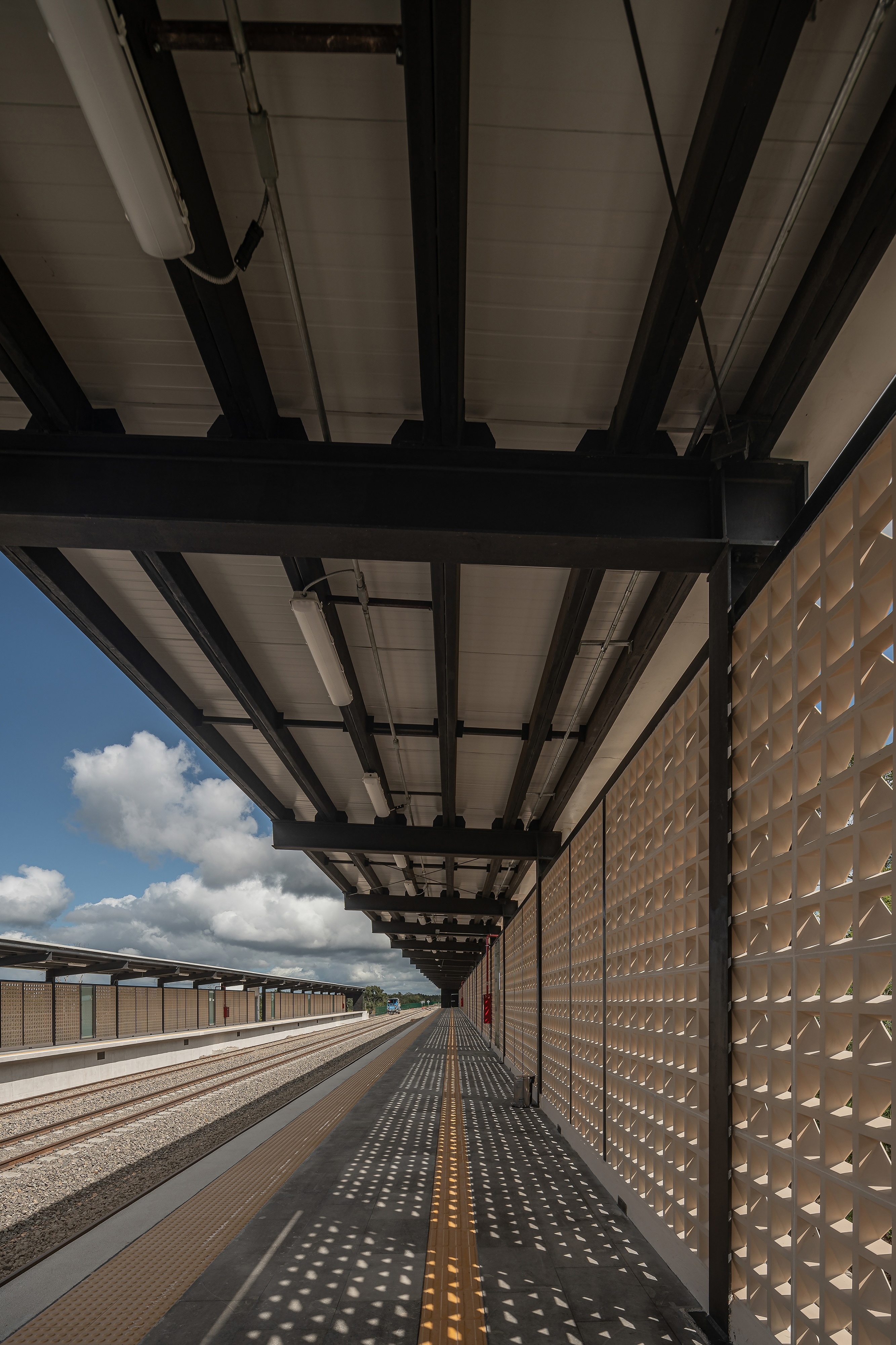
Conceived as an open, curved volume, the building maintains visual contact with the landscape while responding to the region’s climate through passive strategies. Its orientation, cross ventilation, and layered façade brackets reduce solar gain, while prefabricated concrete latticework inspired by regional textiles filters light and air, recreating the atmosphere of the Maya jungle. The courtyard, abstracted from pre-Hispanic murals, and walls finished in cochineal red reinforce the project’s dialogue with local culture.
Built over cavernous terrain rich in cenotes and archaeological remains, the project required continuous coordination with INAH and environmental authorities, adapting construction while preserving the site’s natural and cultural heritage.
Maxcanú Station demonstrates how large-scale infrastructure can strengthen regional identity by integrating architecture, landscape, and community into a single, enduring public space.