
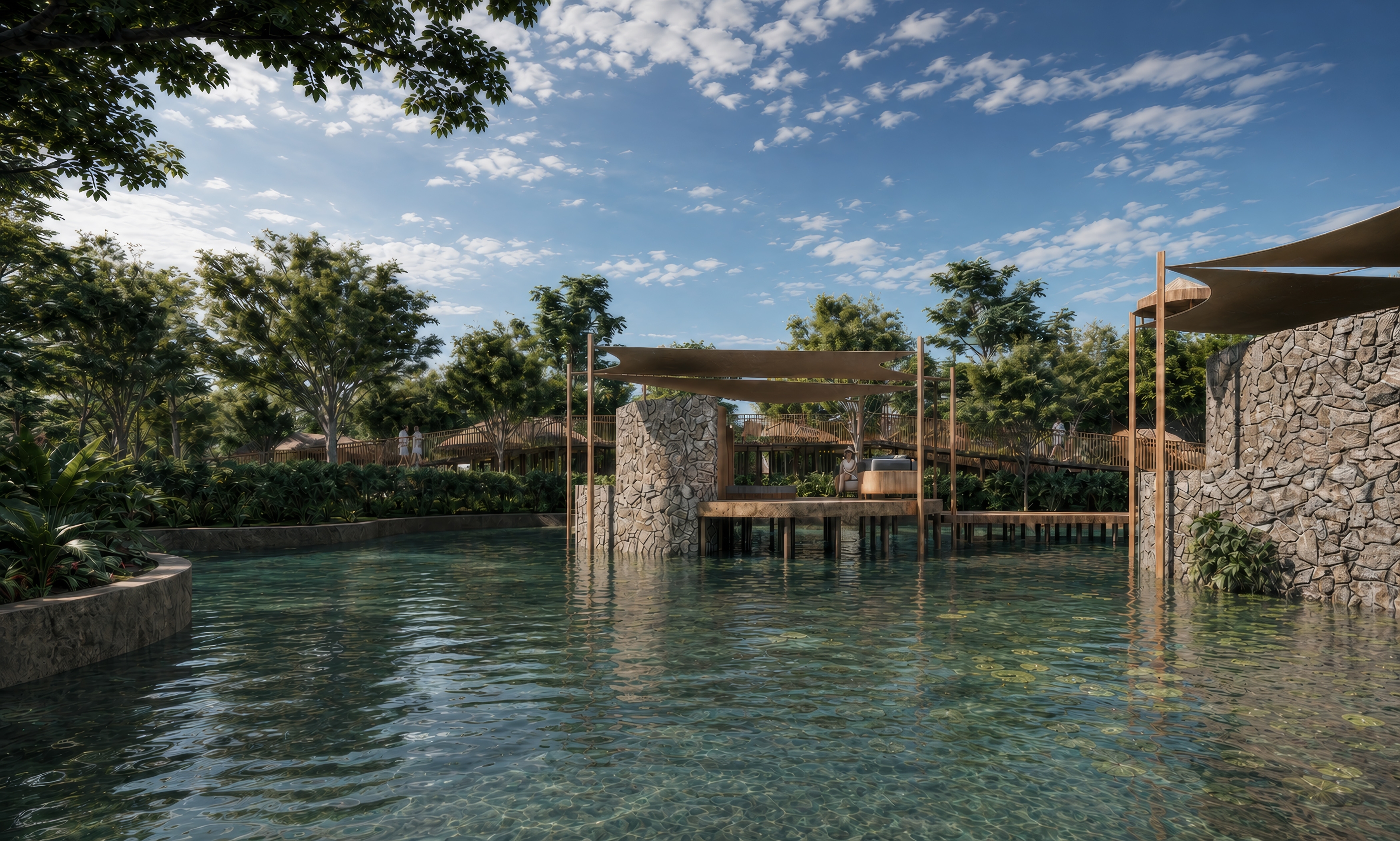
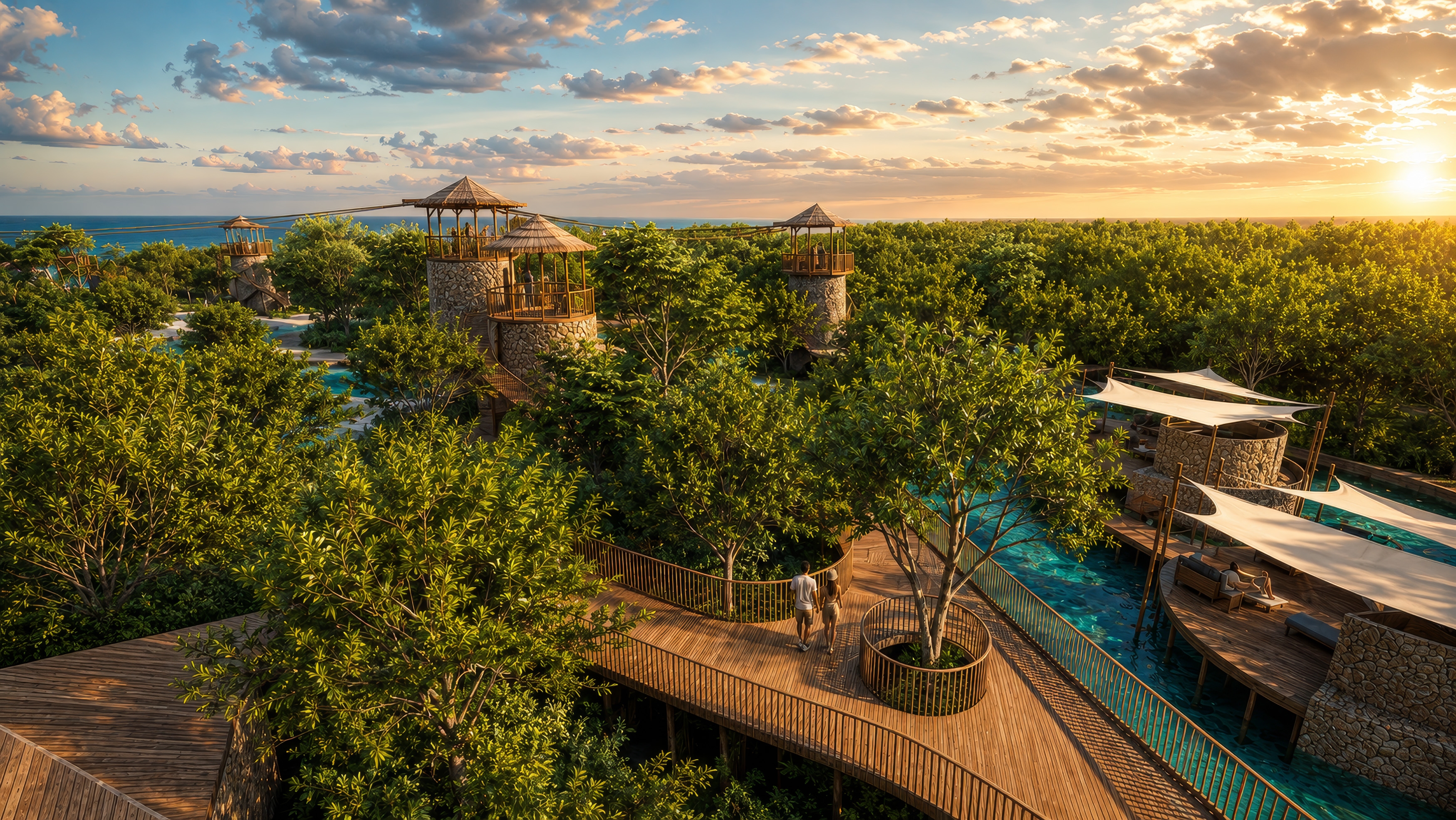
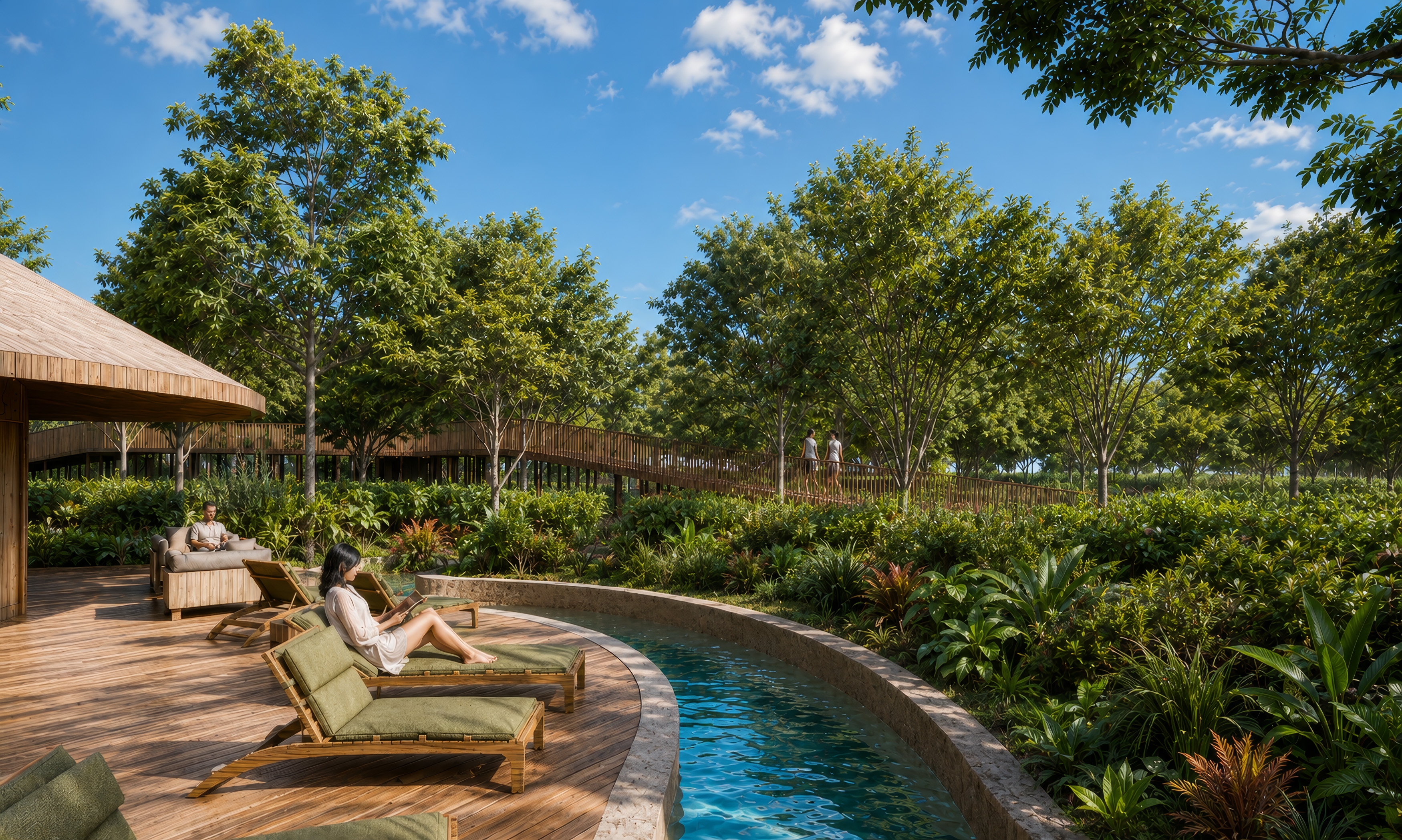
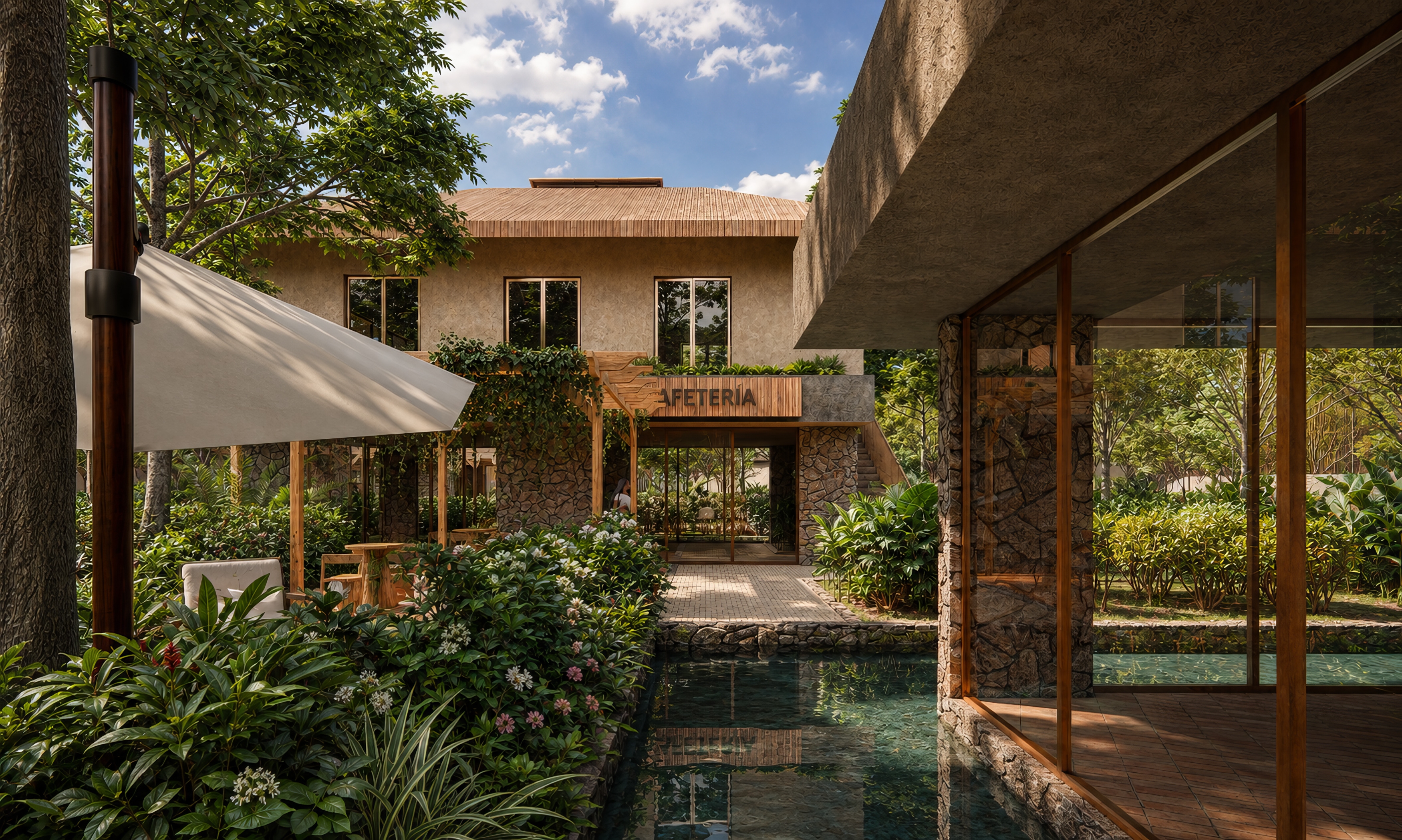
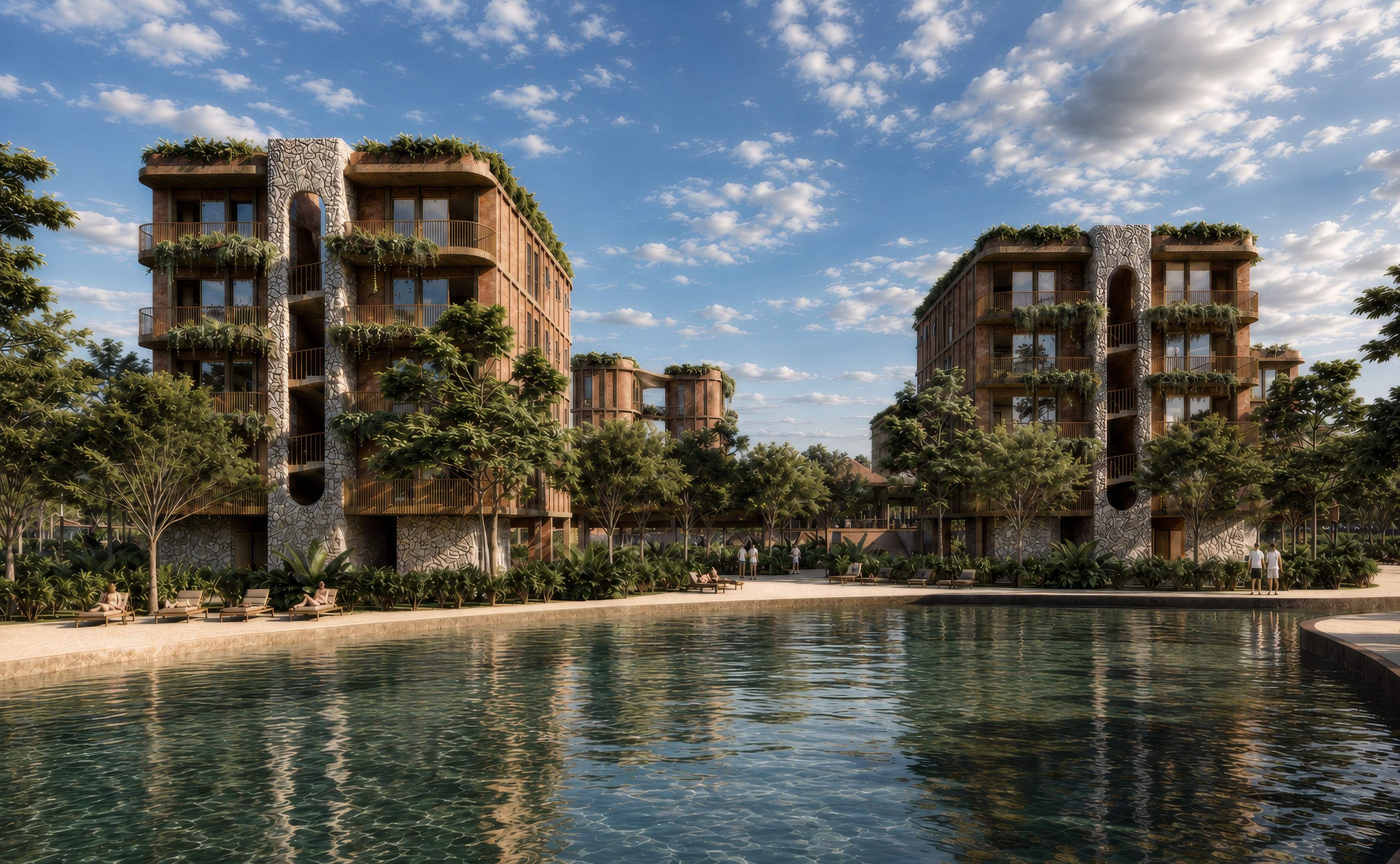
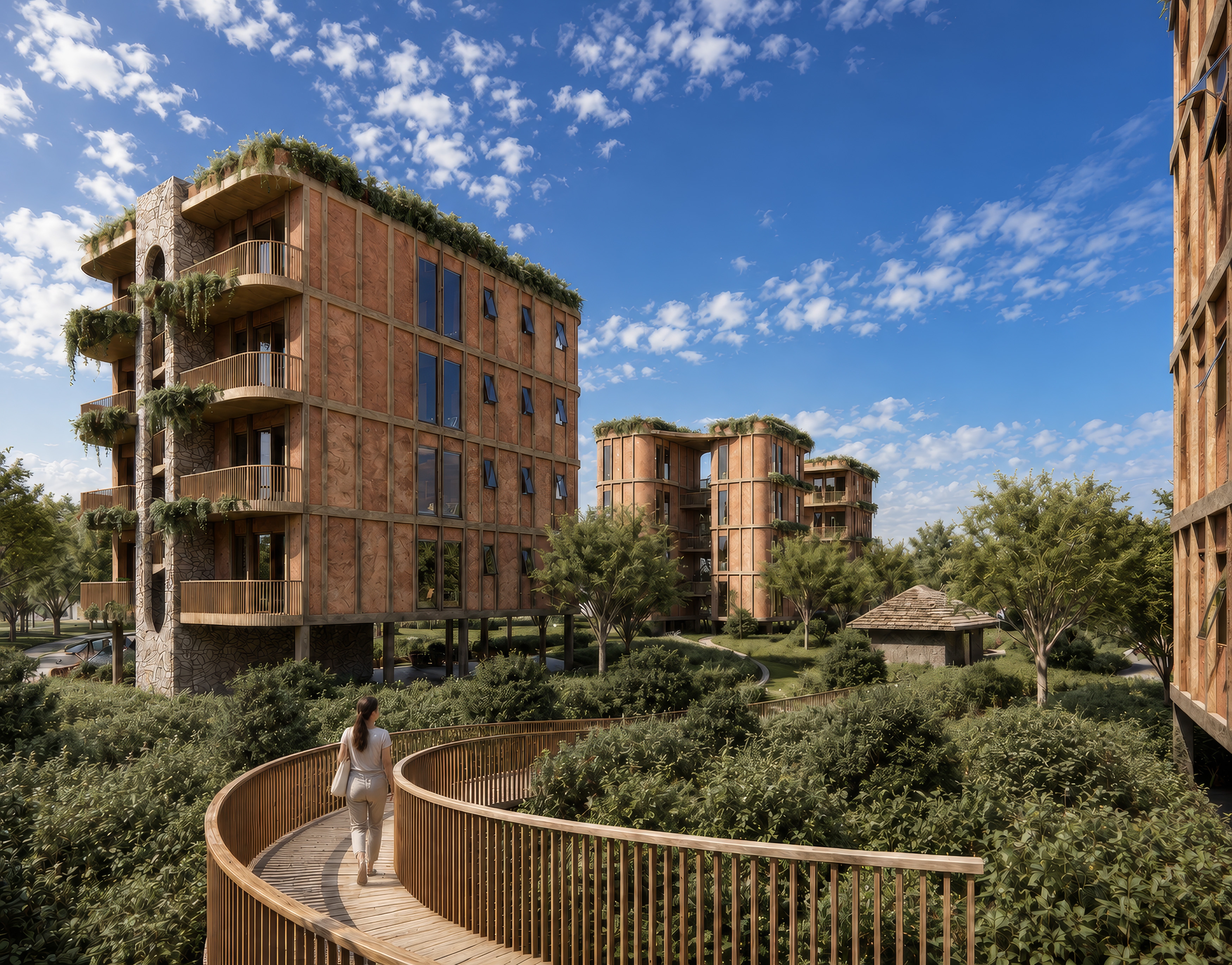
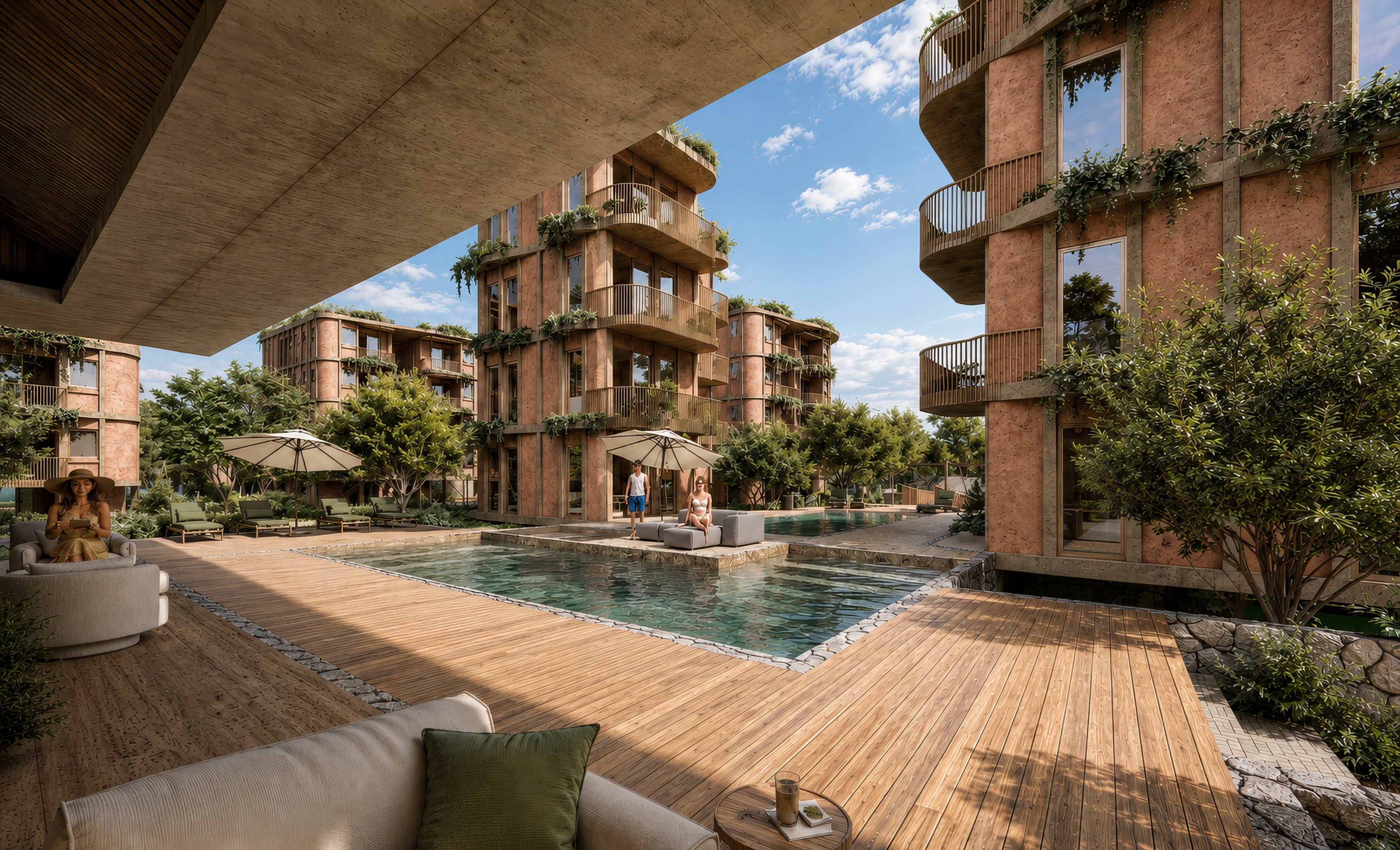
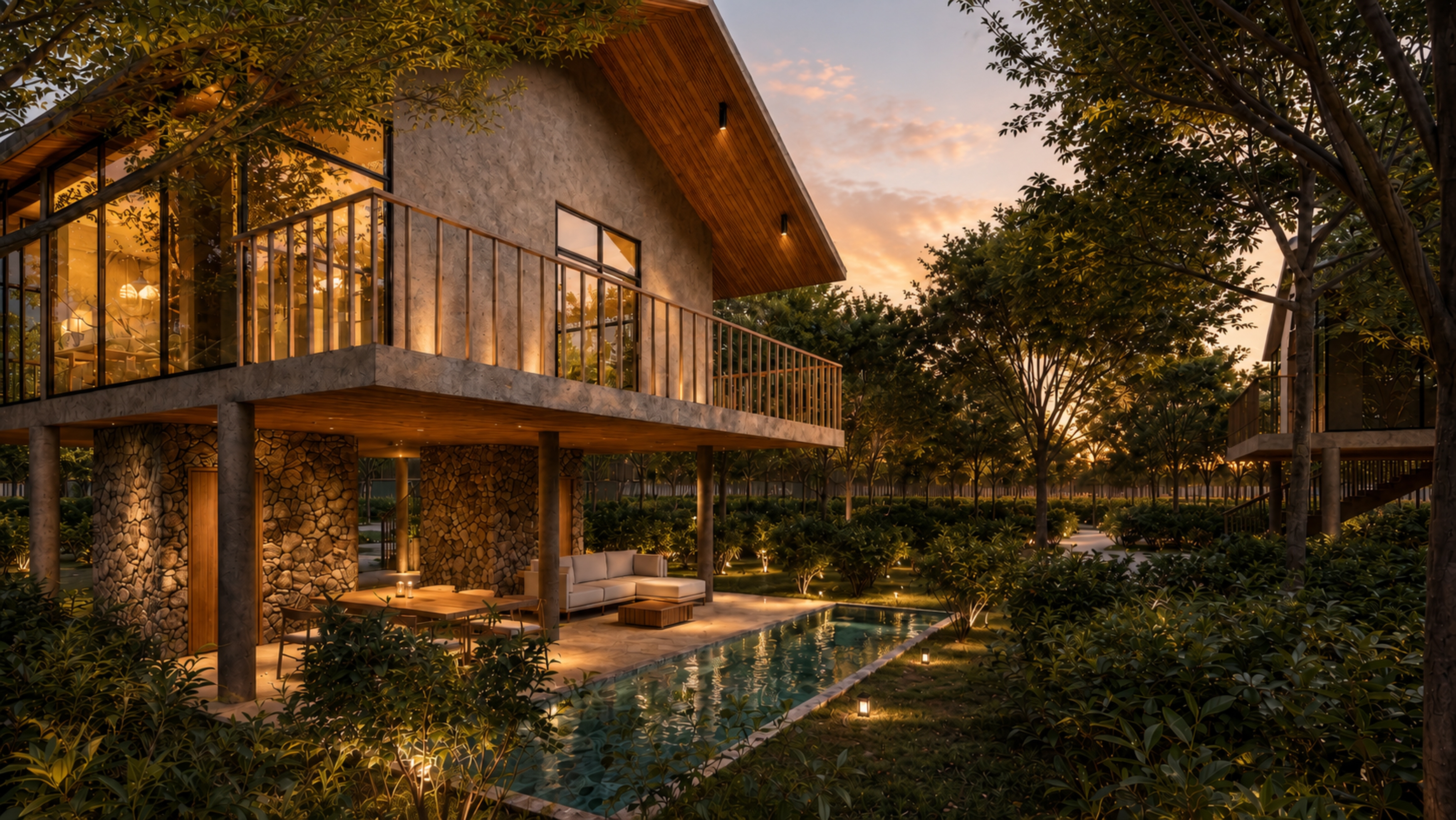
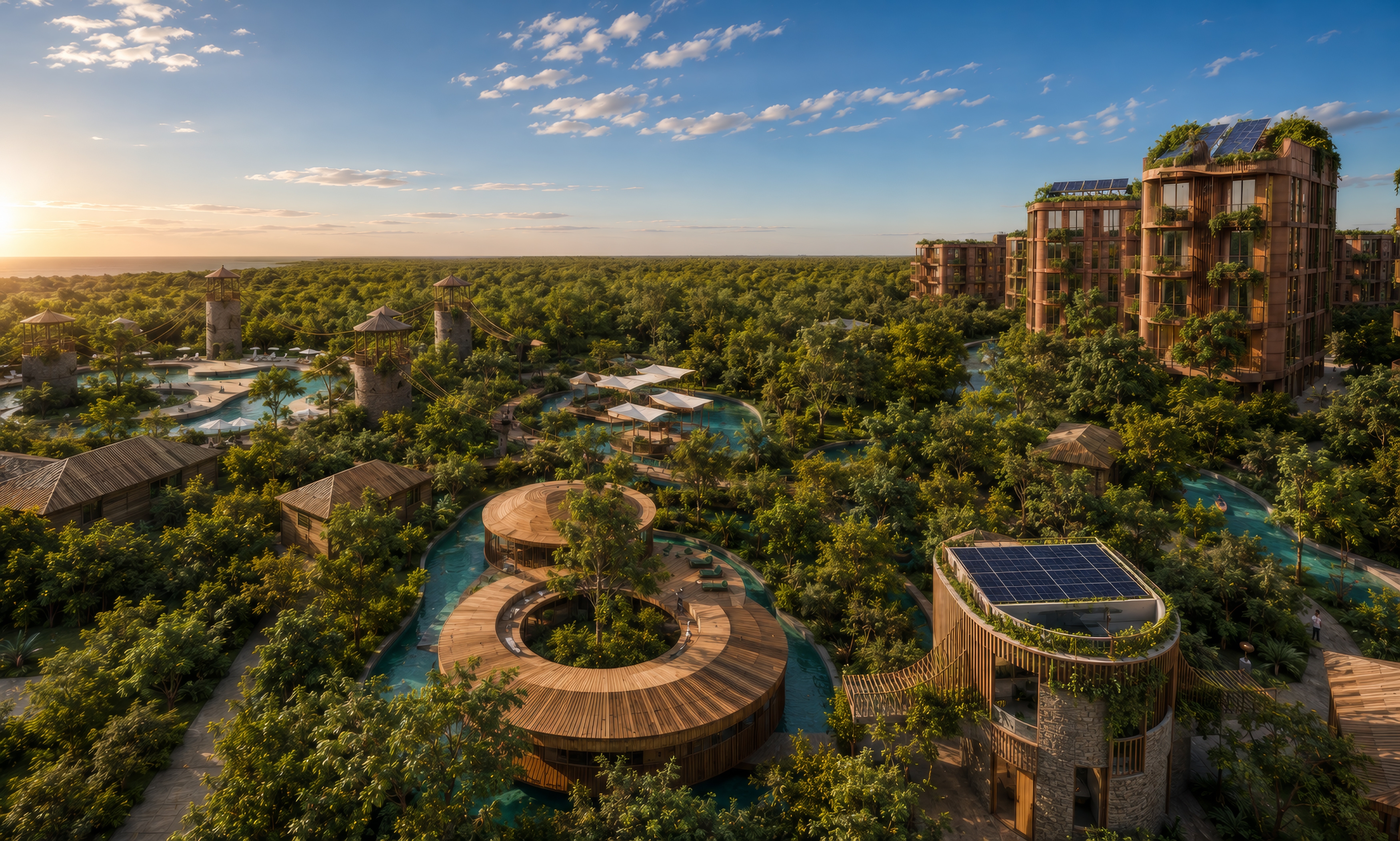
Amid mangroves, sea breezes, and former henequen-producing lands, Viamarina Telchac redefines the relationship between architecture, territory, and nature along the northern coast of Yucatán. Conceived as a large-scale urban and environmental regeneration strategy, the project proposes a new model for sustainable coastal living.
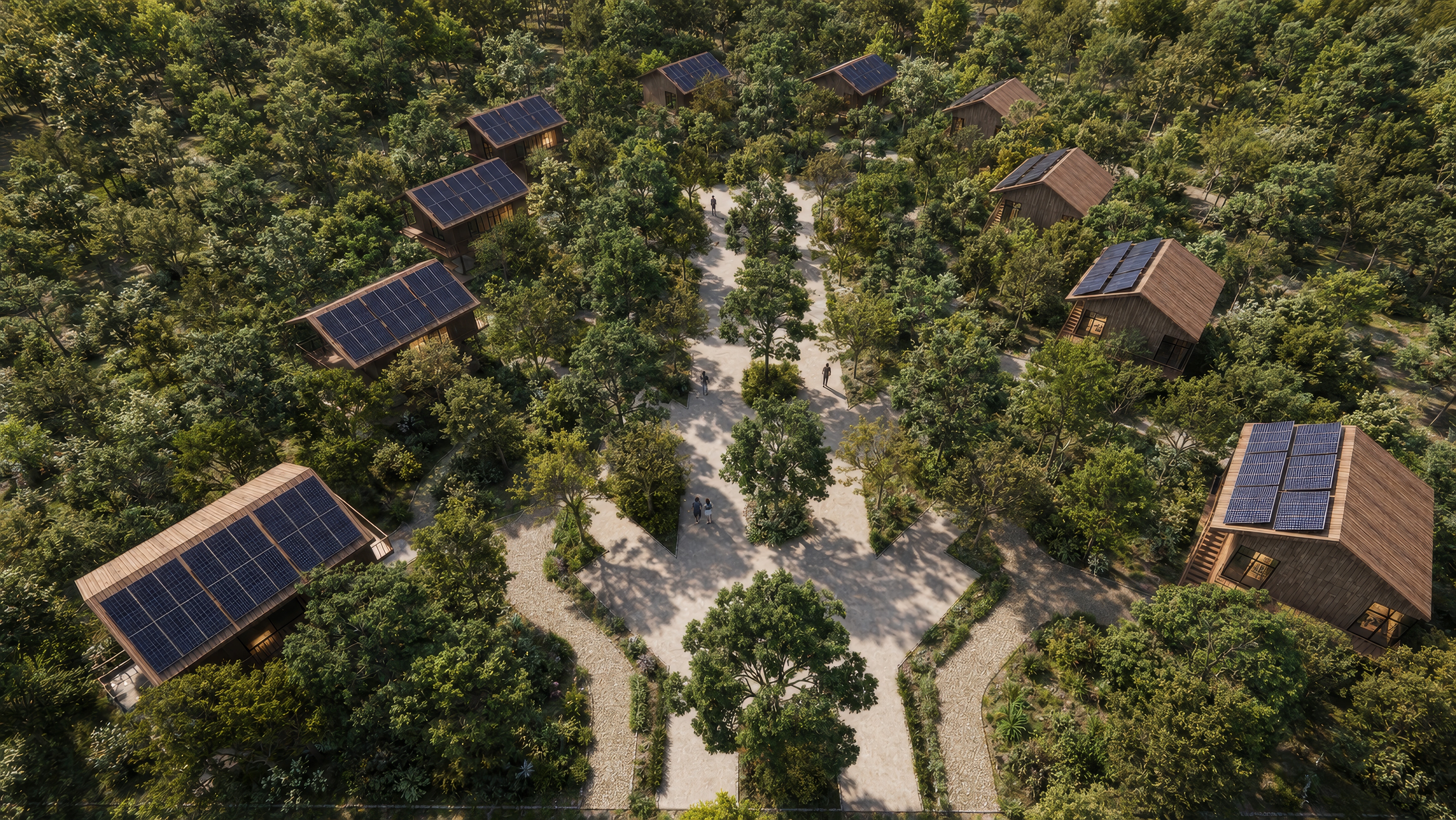
The 195 hectare master plan integrates housing, recreation, commerce, and public space within a permeable ecosystem where architecture coexists with mangroves, wetlands, cenotes, and vegetation. More than 70 hectares are dedicated to ecological conservation and reforestation, preserving biodiversity, restoring natural water cycles, and strengthening environmental resilience.
Bioclimatic and energy-saving strategies—including cross ventilation, solar control, shaded circulation, low-impact mobility systems, and passive thermal design—respond to the tropical climate while reducing energy consumption and environmental impact. Water, vegetation, and public space become structuring elements of everyday life, transforming Viamarina into a contemporary model of integrated urban planning rooted in sustainability, regeneration, and coexistence with the landscape.